Well, this is pretty good escapology, and it happens right in your face. Looks like I have something new to study, as the whole comedy routine fits in perfectly well with anyone who wants to do relatively simple escapes with relatively miniscule props, but played big for the entire audience.
Funny, simple, and elegant: this routine has it all for a good six-minute performance.
Showing posts with label escapology. Show all posts
Showing posts with label escapology. Show all posts
Thursday, October 21, 2010
Project 365 (292/365): Matt Marcy's Thumb Tie
.:292/365: Matt Marcy’s Thumb Tie:.


Wednesday, April 07, 2010
Project 365 (97/365): The Flaming Crate Escape
.:97/365: The Flaming Crate Escape:.
I don’t think this one needs much explanation beyond the video, really. You’ve seen the crate escape during escapology month, and it’s definitely one of the best escapes of all time. This video, taken from the TV special “Finding Houdini”, was Penn and Teller’s very irreverent take on the classic, complete with black humor that just never fails to shock the audience before they laugh tentatively as a helpless man is sent to his apparent doom by the dastardly duo of Penn and Teller.
See, this is good comedy. It was the last thing you expected in the middle of them supposedly doing a tribute to Harry Houdini, and their deadpan reactions throughout the whole thing, as if it were perfectly normal what they were doing, is what really sold the whole routine.
I’m hard-pressed to find actual magic in this particular act, but I have to say that it was worth a laugh seeing people’s faces as the routine just unfolded from what was supposed to be a simple escapology act.
Wednesday, March 31, 2010
Project 365 (90/365): The Crate Escape
.:90/365: The Crate Escape:.
Let’s cap off Escapology month with a doozy of an escape, known as the Crate Escape, and show a version performed by Cyril Takayama.
Why is this particular escape very appealing? Well, it’s rather simple, really, because escaping from a packing crate after it has been shut down is quite a challenging situation. Now, if you wanted to demonstrate your skill at lockpicking from the inside, it would be interesting if they used some padlocks to slam you inside the box. On the other hand, if you just really wanted to show off how good you are, you can have the whole thing actually nailed shut.
The challenge level is further enhanced the minute you have to escape either while suspended from a burning rope in mid-air, or while you’re tossed into the water. There are many different options when it comes to that, but ultimately, whether you choose to put yourself at risk in this manner, or merely shut yourself behind a curtain and attempt to escape from behind the curtain, this is a particularly powerful and popular escape act that – believe it or not – wouldn’t cost you that much.
It’s rather economical to have a packing crate constructed for your needs, or to simply ask for one from a shipping yard, if needed be. Ultimately, you’re not really restricted from doing such a thing, and that’s definitely going to work to your advantage, to be performing something that plays to a really big crowd for the fraction of the cost of a brand-new full-scale illusion. A simple packing crate that will more likely than not support your full weight is sufficient as a finale, especially when it’s coupled with other challenging items to escape from, such as ropes, handcuffs, or a straightjacket, if needed be.
As the month of April will be welcomed by none other than Penn and Teller, it would probably be good to note this early that they have a particularly humorous albeit sadistic take on the crate escape, and you’ll like that version if I ever manage to find the video online.
March is over and done with, and April Fool’s will be coming tomorrow, but rest assured that the art of escapology will continue to be acknowledged as simply one of the most challenging, at times dangerous, and downright stupefying aspects of magic. That it requires a lot of skill and less of trickery is a great thing, and that there is no need to deal with sceptics and the likes when it comes to the rudiments of escapology is also a plus for the sensitive performer.
Tuesday, March 30, 2010
Project 365 (89/365), And Random Thoughts...
.:Mafia Wars, Adventure Quest, MMA Pro...:.
I must admit, being occupied with all those games online has managed to kill my social life after work. But whaddaheck? I love it. :P
So if you happen to be on my Facebook, and you play Mafia Wars, do add me up. If you’re not playing that game, try playing MMA Pro as well. It’s awesome, and I need all the friends I could get to play the game. Heh. Just use the search bar on Facebook, and you’re bound to get it.
.:Getting Back Into The Groove Of Things:.
Had an interesting weekend filled with Magic: The Gathering tournaments. I played out a Legacy and Vintage tourney, and made a decent showing out of it, as I came in 16th in a field of 63 in Legacy, then made it into the top 4 in the Vintage tournament, bowing out to Lance, the eventual champion of the day, who was using Tezzeret.
All in all, it was a pretty good outing, and I hope to write a detailed tournament report if and when I find the time. I may forget some names and which deck I fought on which round, but it should be a pretty insightful look into how my thought processes generally work when playing.
In all honesty, I still feel very rusty and my play level isn’t at the same high level it used to be. Despite that, I’ve been re-learning my way around the tournament circles, and I’m hoping to find opportunities to really make a splash in the local meta once again.
.:89/365: The Bamboo Torture Device:.
As you can tell, a lot of Dixie Dooley’s escapes are mostly classic escape acts he has borrowed mainly from Harry Houdini, although I’m not fully certain that is the case with the Bamboo Torture Device.
The mechanics of the Bamboo Torture Device are a bit more complicated than average, which results in my displeasure with the routine: essentially, the escapologist is restrained via ropes looped through a piece of bamboo, and is held in place by two volunteers who will try to hold onto the ropes with all their might so as to prevent the escapologist from slipping out of the whole apparatus. Then, after a bit of a struggle, he manages to break free from the restraints, and the volunteers have no idea how he managed to get past the ropes and the bamboo.
I still don’t get why it’s called a bamboo “torture” device, in all honesty. There’s no semblance of torture involved even when you describe how the whole thing works, and it just seems patently silly to have to call it so if there is no amount of torture involved in the whole routine whatsoever. Furthermore, even by watching the routine, there seems to be very little room for drama or excitement, and it’s not something I would want to use without making some elaborately funny script about it meant to downplay the fact that out of all the escape acts we’ve shown or described so far this month, this one happens to be the least intimidating or at the very least interesting of them all.
I can’t tell you enough how underwhelming I find the bamboo torture device to be as an escape, although I do recognize that it has its uses, especially in the hands of a good performer, but on its own, the routine cannot get by without a lot of gravy from the escapologist, which I have seen from the likes of Herman Aquino in the past. If he just decided to do it without any flair, it becomes a very rote performance that could be replaced by something far more exciting, but then, this only goes to prove that while effects are important, it’s the performer who can ultimately determine how powerful the impact of a routine really is.
Monday, March 29, 2010
Project 365 (88/365): Gravity Boots
.:88/376: Gravity Boots:.

Useful...
Gravity boots are among my favourite items in escapology for suspended challenges because they tend to do a good job of supporting your weight when you’re hoisted upside down to about indoor level or two floors high. Anything higher than that, and I’d strongly recommend you use something else to keep you from falling.
In any case, gravity boots are a very essential tool for escapologists who like suspending themselves upside-down, and an excellent item for exercises and endurance tests that the dedicated escapologist would have to be prepared to undergo. We’ve seen it used by Penn and Teller, Christian Bale in “Batman Begins”, and quite a few other famous people, and it was all the rage in the early 90’s as a fitness fad, the way running happens to be nowadays.
Gravity boots are relatively inexpensive, well-padded, and assure you that you won’t injure your legs when you suspend yourself upside-down. It’s also very cool-looking, and relatively inexpensive for what it does for you. If you’re more comfortable with this than the woven nylon loops, then by all means, go for the gravity boots instead.
Personally, I’m a fan of the item. It’s just unfortunate that they’re not too readily available locally and you’d need to order it online. Nonetheless, it’s a very worthwhile investment, and doubles both as part of an escapologist’s arsenal and as a fitness item.
Sunday, March 28, 2010
Project 365 (87/365): The Houdini Rope Tie
.:87/376: The Houdini Rope Tie:.
Similar to the Siberian Chain Escape, the Houdini Rope Tie is one of those escape routines that’s generally one-shot, although half of this procedure is used in the Gypsy Mystery.
In essence, the thing that makes the Houdini Rope Tie really work and convince people is that you actually ask two volunteers to tie the rope around your wrists as tightly as they conceivably can. After all that effort to secure you into the ropes, with just a simple turn, you demonstrate that you are almost immediately liberated from the ropes with little to no effort.
I doubt you’d want to pair this with the Siberian Chain Escape or the Spirit Rope Tie, but this is a nice opener before you get into the Shanghai Shackles, as it certainly establishes how easy it may be to escape from rope, but prove how “difficult” it is to escape from padlocks instead. The contrast and the absurdity of the actual performance makes for a very synergistic pair of routines, to say the least. It’s pretty entertaining to do a lot of escapes and work your way up in terms of difficulty, while at the same time keeping the laughs going by using various methods, whether sarcasm or genuine frustration while attempting various escapes.
If it weren’t for the fact that I do cut and restored rope routines, I’d have gladly included the Houdini Rope Tie in my performances. But then, since I’m fairly well-known for the cut and restored routines, I figured it makes more sense for me to use ropes for only one purpose than do a whole bunch of things with them. Still, I guess a differently-formatted show could feature a rope escape of epic proportions, and this routine is a nice lead-up to that.
Saturday, March 27, 2010
Project 365 (86/365): The Siberian Chain Escape
.:86/365: The Siberian Chain Escape:.
One of the classics in escapology, the Siberian Chain Escape is like the poor man’s version of the Shanghai Shackles in terms of how menacing and intimidating it looks as an implement of restraint, but functions in much the same way, and lends itself to a whole different variety of gags one can use in performance.
The main difference for the Siberian Chain is that there is a distinct lack of in and out moves one can pull off while performing it simply because of the mechanics involved in this particular escape. I think this is fair enough because this results in a nice variation and break from all the comedy moves that are heavily featured when performing most of the other Spirit escape acts, which of course includes the Shackles as well.
Whether you demonstrate your ability to strike a lock into submission or instantly liberate yourself in full view of the audience, the Siberian Chain has a very exceptional advantage in that it’s very compact to lug along with you, and allows the audience to tighten the chain around you as much as they want, and yet you’d still figure your way out of it in record time.
It’s also a lot cheaper to have made, as just watching the performance, you can almost just take a regular chain leash for a dog, modify it a bit, buy a suitable padlock, and perform it right away, if that’s what you’re so inclined to do.
Ultimately, there are only so many ways to get out of chains and ropes and locks, and it pays to have a wide variety of these items even if the basic mechanics may all be the same in essence. Give this routine another watch, and see if there are any presentation touches you can add that are uniquely your own to make the routine more appropriate for you. As a very inexpensive and fast-paced but one-shot routine, the Siberian chain escape does have its uses, and is perfect in a street setting as well.
Friday, March 26, 2010
Project 365 (85/365): Knots And Ends
.:85/365: Knots And Ends:.

Eaaaaggghhh! This is too much pun-ishment!
Thursday, March 25, 2010
Project 365 (84/365): The Steel Straightjacket
.:84/365: The Steel Straightjacket:.
While not particularly as dangerous as skydiving and escaping from a straightjacket at the same time, the steel straightjacket visually ups the ante by making it look more and more impossible to break away from. Just looking at the contraption, the normal dexterity skill people can exhibit during regular jacket escapes is thrown away and replaced by a lot of lockpicking skill that is normally never used in such close quarters.
Dixie Dooley’s version of this is particularly engaging because the steel contraption certainly looks very restrictive and intimidating all at the same time. It’s very impressive how he demonstrates his apparent skill in lockpicking, and I like how his eyes tell an intense story without him having to do much else as he goes through his performance. Dixie’s really gifted when it comes to making people take notice of him, and this particular stunt is something that steps up from the standard straightjacket act without having to add any great amount of danger, but certainly adding to the challenge of the escape itself rather safely.
My only gripe with this device is that it needs a lot of custom fitting because it’d be terribly unremarkable if you ordered a steel straightjacket that was simply too big for you. It’d be as clear as day from the get-go if you tried to pass yourself off with that, and if you did the opposite, you might not even be able to fit yourself into the steel straightjacket, to begin with.
Wednesday, March 24, 2010
Project 365 (83/365): The Danger Creep Factor
.:83/365: The Danger Creep Factor:.
You know, escapology is already dangerous enough on its own in a good number of cases. Despite that, when someone manages to do something successfully, there seems to be this insatiable desire to top the previous act, whether by making it more amazing, more fast-paced, or... more dangerous.
First, we had the straightjacket escape. That wasn’t terribly dangerous, but it was certainly a challenging escape, and we’ve seen how someone like Harry Houdini, in order to really escape faster than normal, would actually dislocate his shoulder and the like just to gain enough slack to wriggle his way out of it. Even without any other factors, the straightjacket is already a revered and powerful tool in the escapologist’s arsenal.
Then, they decided to up the ante by making it an upside down escape. It’s still a straightjacket escape, but it’s more dangerous because you can legitimately pass out if it takes you too long to get out of the contraption. There’s also the added danger of the jacket, buckles and all, landing on someone’s face as it plummets down from where you’re hoisted up, not to mention the off-chance that whatever is holding you up malfunctions and you fall to your death.
But no, that wasn’t enough. They decided to put you in a box, submerge you into the cold river, and let you break out of that after you’ve gotten out of your straightjacket. Now, you have to deal with hypothermia or drowning, and plain finding yourself too far out from the shore or the dock by the time you liberate yourself.
And with this particular performance, you now have to escape from a straightjacket, then catch your parachute, then hope to make it to the ground safely, and pray that the jacket doesn’t hit anything valuable, let alone anyone, on its way down at terminal velocity.
Escapology is dangerous. We can’t stress that enough. Unfortunately, the more people see it all, the more performers feel the need to up the ante and make it more and more dangerous than it ever has been. Personally, I find this trend very alarming. Why are we invalidating our insurance policies for a few thousand bucks again?
Monday, March 22, 2010
Project 365 (81/365): Criss Angel's "Daring" Building Escape
.:81/365: Criss Angel’s “Daring” Building Escape:.
This much-hyped performance by Criss Angel has got to be one of the most maligned acts in recent memory, to my recollection. I don’t really know if it’s because the escape seemed so contrived, or so needlessly dangerous, or so unbearably reeking of fakeness, or full of logical gaps that appear to be gamed in favour of Angel, but ultimately, this stunt has polarized more people when it comes to Angel, more than any of his other acts.
It’s a simple premise, really. Trap Criss Angel in a condemned building set to be imploded, and see if he can get out in time. Have cameras track as much of this whole stunt as possible, but *conveniently* disappear from covering his escape the moment the building is blown up so as to maintain the suspense.
Yes, you can tell I’m not too big a fan of Criss Angel. Bear with me, though.
Criss Angel manages to safely get away from the whole thing, and lives to fight another day. He takes his applause, and people start talking about how he did it, or if it was even a legitimate escape to begin with. Either way, he has gotten people talking and he has demonstrated a deep appreciation for Harry Houdini in the multiple times he has done escapes or performed magic that Houdini has done during his career, such as making an elephant vanish.
If you watched the video, in reality, there should be no need for Angel to use any trickery, to begin with. Escaping from a building and lockpicking his way out shouldn’t be that difficult for someone supposedly as skilled as he is, because he’s been doing it for years, right? Nonetheless, the choice of shots, the pandering drama, all of it just results in a polarizing outcome where you have half of the people watching genuinely concerned for Angel’s well-being, and the other half morbidly wishing he doesn’t make it out of the building in time because he’s such an insufferable ham.
Still, he has performed a pretty nifty escape act, and for that, I must acknowledge him, whether or not I do like his style. I just wish he’d stop doing these made-for-TV stunts, because it sets back the integrity of TV magic by decades. In an age where special effects are the norm, we’d at least like to prove that what magicians do on TV, they can actually really do live.
Sunday, March 21, 2010
Project 365 (80/365): Thumbcuffs
.:80/365: Thumbcuffs:.
Handcuffs are cute but overexposed. They’re very useful to show off escapes, but when it comes to portability, it’s hard to beat getting plain old thumbcuffs, which aren’t too difficult to acquire at all in this day and age, and packs very small but plays off perfectly well with a close-up audience.
Thumbcuffs work on the very same principle as their larger counterparts, except for the fact that in locking your thumbs up, it becomes much more difficult to lockpick your way out of them due to the limitations in mobility imposed by the cuffs.
However, any escape artist worth their salt could tell you that there is a nice little feature thumbcuffs naturally possess that handcuffs don’t. And this one little feature makes all the difference and enhances escapes for those who utilize thumbcuffs when it comes to the speed of execution required to pull off a decent escape. It’s funny, it’s amusing, and it certainly has the qualities of a regular in-and-out happy routine.
If a street performer ever felt uncomfortable carrying out full-sized handcuffs, or, heaven forbid, a set of Shanghai shackles at any given time, I do believe that utilizing these very cool thumbcuffs could be a happy medium, as it certainly does the job very well for establishing yourself in less than three minutes as a good escape artist with a dapper sense of humor, to boot. The fact that you can easily subject the average spectator to these cuffs and demonstrate to them how difficult it is to escape from the contraption is just icing on the cake, really.
Project 365 Backlog (79/365): The Rubberband Escape
.:79/365: The Rubberband Escape:.
If you ever bought Dixie Dooley’s video series, you’d have heard of this one, and it’s one of the nicest escape acts you can do to encourage a bit of audience participation.
Essentially, you hand out a box of rubber bands to go around your entire audience, and you ask them to put the rubber band around their pinky and their thumb, the band running behind of their other fingers. The challenge to them is that without using their other hand or holding the rubber bands against a surface, they should be able to liberate themselves from the rubber band using only one hand.
As they struggle to do that, you demonstrate to them how easy it is, and then move promptly on to the rest of your show.
It’s simple, it’s fast, and because you extended the challenge to everybody else, you’ve made it very clear that you’re a very skilled performer and not everyone can just go out there and do what you do. As an opener or as a breather after a particularly scary act, I think this suits your needs very well, and could take you places, to say the least.
Considering a box of rubber bands isn’t terribly expensive at all, this is a pretty good routine to add to your show if you need a bit of a time-filler that requires some audience participation. It’s also one of the easiest ways to get people interested in escapology, as it’s a basic building block for the skillset they will eventually need if they got very serious with this particular aspect of the art: dexterity and a cool head under pressure. If you did this experiment on an audience, you will notice for sure that a lot of them get frustrated over the fact that they can’t seem to escape from the loop no matter how hard they try.
Friday, March 19, 2010
Project 365 (78/365): Excess Baggage
.:78/365: Excess Baggage:

I’d love to do that. I’m not claustrophobic, after all.
Thursday, March 18, 2010
Project 365 (77/365): Robbie Williams's Escapology
And finally, the backlog has been cleared out! Whew.
.:77/365: Robbie Williams’s “Escapology”:.
.:77/365: Robbie Williams’s “Escapology”:.
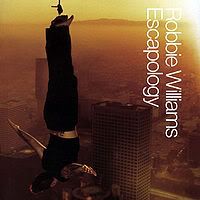
Yes. I meant the album.
I wanted to go and talk about this particular album, if only for its title. I like Robbie Williams as a musician, and ultimately, he’s one of the better performers of our generation.
This album was sort of a coming of age for Robbie. It was his fifth studio album, and it actually marked his noticeable increase in creative control over his album. He parted ways with his songwriter, Guy Chambers, and started writing more songs in the album himself, as well as redoubling efforts to actually break into the United States, which he last achieved with his debut solo album, The Ego Has Landed.
Anyways, I think the title of the album really suits Robbie and the way his life really is, because he’s a very misunderstood genius, in my opinion. He has had numerous songs, and his talent is definitely immeasurable, but he’s always had the problem of not quite finding out how to break free from his demons and given the Take That reunion, his past.
Escapology as a magical art is aspirational and symbolic to most people who watch it. The excitement of seeing a man in mortal danger for our entertainment cannot be denied, but neither can we ignore the sheer joy that comes with seeing the escapologist succeed, and us living vicariously through his very success. It speaks to us of the escape that we seek and crave from the mundane, from the dreary, and from the mediocrity we beset ourselves with in daily life.
With every chain, every rope, every lock we liberate ourselves from, in the audience’s minds, they are reminded that they can break free from their own bonds as well. The bonds of bad governance. The bonds of apathy. The bonds of underachievement. There are so many things wrong with this world, but escapology, as opposed to mere escapism, shows us that those who wish to make a stand can and will find ways to break free. It’s not merely about getting away from something. It’s about ending the cycle and breaking past it.
We all need a little escapology in our lives, I guess. Whether we need to escape from the problems we’re dealing with, or we need to escape frivolous accusations against our reputation, or escaping Being itself (Thanks for nothing, Levinas!). Give the album a listen, and take note of the song entitled “Come Undone”. I’m pretty fond of that song.
Project 365 Backlog (76/365): Assistant's Revenge
.:76/365: The Assistant’s Revenge:.
One of the best escapology routines ever that involves no mortal danger to the performers, the assistant’s revenge is an escape act that really catches the attention of people because of the apparent sheer speed it is executed.
Invented by one of the best minds in the world of magic, Robert Harbin, this act features a magician restraining his assistant by an assortment of locks and straps to a large apparatus, then as he closes the curtain around the whole thing, by the time he comes out on the other side, it’s no longer the magician, but the assistant. In one continuous motion, he reopens the curtains, showing that the magician is now in those same restraints, effectively proving that he has gained his “revenge”.
What else can I say about this routine that I haven’t covered in the description? Well, for starters, it’s a very strong favourite among escapologists and illusionists alike, and is certainly capable of ending a show if they wanted it to be the highlight of the night. What makes this routine very amazing is the simplicity of the whole script, and the delayed reaction before people realize that a very inexplicably fast switch just happened right before their eyes.
Even if I know the mechanics behind this particular routine, I still can’t help but be amazed everytime I watch it. It’s like “Metamorphosis” done horizontally, if that makes any sense at all.
With that in mind, this is a fairly expensive routine to set up, what with the curtains and the apparatus and all that. There are plenty of variations on the routine, although I’d be incredibly happy if I could come up with my own presentation for it, since this routine has a lot of legs and can have a ton of options one can work with. Just don’t do a joke where you switch again and again and again and again because after the first or second switch, any further iterations just really turns the routine into a joke, which is the last thing you’d want to do with something that normally costs the average performer $4,000 to have made and shipped to their doorstep.
Project 365 Backlog (75/365): Buried Alive
.:75/365: Buried Alive:.
Can we ever run out of things to say about escapology that doesn’t point back to Houdini, really?
Ladies and gentlemen, what I personally believe to be the most terrifying of all escape acts without having to utilize any additional implements to increase tension: the buried alive act. One of the stunts forever attributed to Houdini, and apocryphally linked to his untimely death (If you read my bit on him in a previous post, you would know this isn’t true.).
I don’t think I even need to describe how dangerous and traumatic an experience it is to have one’s self buried alive. In my estimate, the above video is actually a much more sanitized version of the escape because if something goes wrong, it’s easier to crack the apparatus open than it would be to dig out a guy buried six feet under the ground. Many magicians have attempted to do the buried alive stunt, and some unfortunate souls, such as this guy, have paid the ultimate price.
It’s no secret that being buried alive is a terrifying prospect, but some of the most bullheaded performers just insist on doing something so shocking, so terrifying, that they just might end up regretting it. This routine is something I’m personally very afraid of doing, as I’d sooner have myself hoisted up three hundred feet in the air to do a straightjacket escape upside down than get myself six feet under by choice.
And this is considering I’m deathly afraid of heights. Ultimately, my chances of survival are a lot better at escaping a straightjacket than having nine tons of dirt poured all over me and a plexiglass coffin that may not even sustain the sheer weight of the dirt pouring all over it. The minute that coffin cracks, so do you. There’s simply no two ways about it, and I can’t emphasize enough how dangerous this stunt really is. When you have a skilled and popular performer like Banachek willing to teach his secrets for free to people who wish to attempt this stunt in hopes of keeping them from getting themselves killed, you just know how many people fear and respect the buried alive act for the dangerous performance that it truly is.

Project 365 Backlog (73/365): The Silk And Rope Escape
.:73/365: The Silk And Rope Escape:.
This is an effect made famous yet again by Harry Houdini, except he actually makes a point of teaching his audience how to do this routine afterwards.
Essentially, you bind your hands with a silk handkerchief, and then run a length of rope in between your hands, effectively held in place by the silk. Without the audience even realizing what happened, you just magically break free from the ropes, with next to no effort whatsoever.
This is a very impressive escape because if you explain the mechanics carefully, it will boggle the mind how you can get away from the loop of rope without even so much as breaking into a sweat. It’s very quick and easy to do, and any magician with a modicum of skill at misdirection wouldn’t find it difficult at all to pull this off.
I even perform a variation of this utilizing handcuffs instead of a silk handkerchief. It works in pretty much the same way, which is a very good thing, since handcuffs are a lot more menacing than a silk handkerchief, to begin with. It doesn’t hurt that I can also lockpick my way out of the cuffs, allowing me a one-two punch when I perform this routine, although I wish it took me significantly less time to lockpick. I still take well over fifteen seconds, and the best pickers take only five seconds.
Wednesday, March 17, 2010
Project 365 Backlog (72/365): The Crazy Man's Handcuffs
.:72/365: The Crazy Man’s Handcuffs:.
The Crazy Man’s Handcuffs is a classic routine that falls under escapology, and can astound and amaze a lot of people for the small price of two rubber bands.
Essentially, you interlock two rubber bands and hold them with your fingers in such a way that unless you let go of the rubber bands, you can’t free yourself. The magician demonstrates that this isn’t entirely true by rubbing the rubber bands together and magically letting one pass through the other, all the while with the audience looking on very closely and completely clueless as to what just happened.
I must say, this routine is one of the most impromptu demonstrations of escapology available, and if you ever bother picking up the Dixie Dooley Escapology series, you’d even find another neat little escape act there with rubber bands.
Subscribe to:
Posts (Atom)