Showing posts with label philosophy. Show all posts

Sunday, May 08, 2016

Via Negativa, Or Why I'm Abstaining

.:Via Negativa, Or Why I'm Abstaining:.

I was supposed to write about something else, but on the eve of the elections, this seemed very important to talk about.

I am abstaining for president this coming elections. This was not a simple conclusion I came to. In fact, throughout the campaign period, I was trying to find a candidate who can sway me otherwise.

Unfortunately, none of them have managed to do that.

I have a Vice President (Leni Robredo), and I have two senators I will fight for (Susan Ople, TG Guingona). Anyone else, I am ambivalent about at best.

But I'm sure, given how many people have decided that they respect anyone's opinion unless it's "I abstain for president," that a lot of people are wondering how I arrived at that conclusion, and why I'm sticking by it after a couple of months that I could have changed my mind.

If we wanted to find the perfect candidate from a pool of candidates, how do we find them? Well, one can do it by looking at their merits, and then adding up the one with most merits, but that doesn't really settle the question of perfection, right? To find perfection, you had to find someone who lacked imperfection. It is the concept of via negativa: a process of elimination in order to find the best. After all, if something has an imperfection, how can it be perfect at all? Only through a process of elimination can we find what we are willing to put up with.

Obviously, we cannot expect perfection from our candidates. That is why we instead need to look at our own personal deal breakers, and see what is the worst that we can accept. From there, and only from there, can we proceed to look at the merits, if any. I recognize other people may do it backwards, but for me, I have to start with what I cannot accept, before I go with things I actually like about the candidates.

For example, I cannot accept a candidate who would cite scripture as an excuse for persecuting homosexuals, especially when they would say that they should be put to death. I do not care if they brought us international pride by winning boxing championships or if they pushed for the abolition of the pork barrel.

Not pictured: Senator material.

On the other hand, while I don't like political dynasties, I am willing to give a guy who believes they're okay a pass so long as they're Dick f'n Gordon. Officially, there's a lot more nuance to that, but you get my point.

Or his *point,* for that matter, if you know what I mean? #IpasokSiDick

And that leads us to our five presidentiables.

1. Mar Roxas


The Tito joke, personified.


I could not overlook Mar's apathy and his inability to relate to people. If a president does not know where I am coming from, how can I be sure that he will understand me when I want to be heard? The past six years has been a painful exercise of tolerating the Aquino administration in its own echo chamber where they can do no wrong. Despite the good they have done, I cannot, in good conscience, allow that to have "continuity." There is insensitivity here, and it does us no good to just call the people who feel shortchanged or are suffering as merely "haters," when we should at least listen to their plight first.

I also cannot tolerate cronyism, especially the kind that gives people like Abaya or Purisima the ability to keep carrying on as if they have done nothing wrong, or at least haven't been particularly competent at their jobs.

He's not helping, either.


2. Jejomar Binay


The only thing transparent about him is his barong.


Binay's allegations of corruption are so glaring and so difficult to ignore, and his attitude of impunity towards it is what I find unconscionable. This is a man who will ignore any criticism far worse than the Aquino administration ever did, and that is alarming. I don't think I need to explain my stand on him much, do I?

Jejomar Binay will not be beholden to you once he wins. Let's leave it at that.

Nor his kids.


3. Grace Poe


Needs more denim jackets.


There are only three oh-so-basic requirements for president: you are of age (40), you are literate, and you are a Filipino.

I don't care about Grace Poe being adopted. I care that at some point in her life, she actively renounced being Filipino. You might think this is shallow, but this is not, because how much lower can the requirements for president be, in the first place We don't ask them to have completed any form of education, we don't ask about their health and well-being, or their financial status. These three are as basic as they get, yet Grace Poe can hardly meet them, and purely in principle, could never meet them.

That she is also likely to just continue being Danding Cojuangco's puppet is something I simply cannot stand by, either.


4. Rody Duterte


I can almost imagine how something as innocuous as this 
photo would make diehards scream, "Bayaran! Bias ka!"


I don't care about his cussing, much less if it were directed to the Pope. I'm a bit worried, but I can even understand why he is sympathetic towards the NPA, so even that, I can sort of handwave. I do care about what he says, though, because it encourages some of his followers to demean women, gay people, and people with disabilities. I cannot just handwave that away. You can say that he has done so much in terms of laws to protect these people, but is that enough of an excuse to actively break that protection when it's him doing the talking?

But even that is debatable. We all have some nasty opinions that we might shake off when the going gets tough, but the fact remains that he has actively promised a lot of killing in the effort of cleaning up this country. I am not a criminal. I am not a pusher. But in Duterte's promised land, nothing prevents a cop to one day think I looked at them wrong and insist I am a criminal or a pusher, giving him more than enough reason shoot me dead on the spot.

Or were we all going to magically assume that there are no crooked cops in this country at all?

The fact is, I value our civil liberties and our rights too much to want to give them up on the altar of peace and order.

The altar of Mystica, on the other hand...


5. Miriam Santiago


Was she in the same library as Binay was?


Oh, what could have been! I didn't care about the cancer. And then she backed Bongbong Marcos. That, my friends, was a betrayal of principle that I couldn't stand. Oh, sure, she backed Erap. And then Gloria. But the Marcoses? I can't even.

If the word "sayang" ever made its way to the dictionary, this picture would accompany it.


.:And So, We Come Down To This...:.

And with all that in mind, none of the candidates could ever hope to convince me to vote for them, because they hit dealbreakers I wasn't willing to compromise. I am but one vote, but on May 16, that #abstain (technically, a #Seneres2016 vote) will be heard because if I want change, it starts by not lowering my standards. Because ultimately, change comes from within, and all our leaders can do is to facilitate that change.

To everyone else who feels compelled to abstain, I remind you that there is no shame in doing so. Some people might say that we are abstaining because we do not have any principles to stand upon. I am saying right now that the opposite is true: I  am abstaining precisely because the principles I stand upon are more important to me than a single candidate.

There is nothing wrong with you having different principles from me. I fully accept that to some, Duterte's willingness to "do what is necessary" is a good thing, and not a bad thing. Or that Mar's being out of touch cannot overshadow the great stuff he has done. Or that Poe's citizenship is a non-issue compared to what she brings to the table. Or Miriam's intellect and need for funds for a national campaign outweighs her unholy alliance with BBM. Or that everyone is corrupt anyways, but Binay showed he can do well, thanks to (wait for it...) Makati.

Unfortunately, there would be all sorts of things wrong if I am willing to give up my principles just so I have something to shade this Monday. I refuse to, and that is my right. Abstaining is a choice, and it is not the same as not having voted at all.The sooner people can respect that, the sooner we could stop thinking that every person who is abstaining is simply undecided. You are wrong. I am decidedly not undecided. In fact, I am very sure that we, the Filipino people, deserved better. And just because we aren't getting that this 2016 doesn't mean I will cede my right to say so just so I can vote for a sub-par candidate in my mind and heart.

If one is unwilling to settle just to find their one true love, why would we settle just to find the next person to lead this country for the coming six years? I believe we deserved better, and I make no pretenses that such a position is loftier or more enlightened than anyone who has decided we have a worthy candidate among the five. It is simply one that I have arrived at after lengthy, careful consideration, as most of you reading this right now surely have with your own positions.

We have been thrust by the people running for power into a climate of fear: fear of continuing the ills that this government has demonstrated in the past six years. Fears of the change to come that it might undo the democracy we have fought so hard to win back in 1986. Fears of a seemingly ever-rising crime rate that belies real numbers and magnifies only the worst among us. Fears of an economy crashing down with the prospect of uncertain territories with a president the international community is derisive of. Fears of cheating. Of thievery. Of lies. Of death.

"There is nothing to fear but fear itself." - Marvel Comics


Nation, the real enemy has always been fear. Because in giving in to the fears manufactured by the political machinery, we have ended up fearing our neighbors, thinking them to be monsters or morons. They are not. They are our countrymen. And our countrymen should never have been our enemy in the first place.

Tomorrow, vote as your mind, heart, and conscience tells you. Not the surveys. Not the pressure. And by Great Caesar's Ghost, not the fear. Fear is the enemy. Not ourselves.

And that is why, in the face of all manner of opposition, I choose to abstain from voting for a president in 2016. Because I have more faith in the Filipino people than I do in these five individuals.

I am most certain that my faith was not misplaced.

"Compromise where you can. Where you can't, don't. Even if everyone is telling you that something wrong is something right. Even if the world is telling you to move, it is your duty to plant yourself like a tree, look them in the eye, and say, 'no, you move.'"

- Sharon Carter, Civil War (2016)

Thursday, August 13, 2015

2 Hot 4 8List: 8 Questions I Always Get Asked About Marriage Equality

.:2 Hot 4 8List: 8 Questions I Always Get Asked About Marriage Equality:.

I try my best to be a moderate when it comes to my personal opinions. Most people know what they are, but I try my best not to be combative about them when I encounter someone who doesn't share the same opinion as I. This blog post will not be as charitable, because I've allowed a lot of people to get in their myopic jabs on the topic for long enough. This hopefully addresses most of those so-called issues they raise.

Here now are 8 questions I always get asked about marriage equality, especially in light of the recent SCOTUS ruling that recognizes LGBT marriage to be on the same legal footing as heterosexual marriage.

8. Why are the LGBT redefining marriage? 

First of all, marriage has been redefined so many times over the centuries that it's not even funny anymore. The idea that marriage is a union of love has been a fairly recent idea. There isn't really a "traditional" marriage, to begin with. Otherwise, all rape survivors will be required to marry their aggressor, just as the Bible stated.

In its current form, aside from the idea of one person loving another person for the rest of their life, marriage is understood to also come with concurrent rights. These rights are the crux of what marriage equality advocates are fighting for. It's something under the domain of the government, and in the case of the Philippines and America, the government is supposedly a secular one. What this means is simple: defining marriage as "biblical marriage," while not only problematic because of how the Bible itself defines marriage, also alienates the people who are not subscribers to the Bible.

TL;DR - marriage can stay the same for your church, but the government, in the interest of equal rights for all, needs to reassess marriage in order to live up to this secular ideal.

7. Why are the LGBT forcing people to bake them wedding cakes? How is this equality?

Oh. You mean that story in America of how a gay couple sued a bakery for refusing to bake them a cake for their wedding, then subsequently got awarded over $100,000 in damages afterwards?

First of all, you might not have read the entire story: this bakery didn't just "politely" decline this couple, they also doxxed (that is, they released the identity and private information) of these people when they complained about being refused service. People gloss over this fact, yet when you realize that the doxxing caused them anguish (they were given death threats) and extended that anguish to their adopted kids (they were also given death threats), suddenly, it doesn't seem like the bakery was fined nearly enough for what they did.

There's nothing "polite" about calling people an "abomination," okay? This is every bit as manipulative as saying that the old lady who sued McDonald's over their coffee was being frivolous (she received 3rd degree burns, not just some booboo someone can kiss to go away).

Also, remember how big a deal it was when people would refuse service to black people? Well, why would it suddenly be okay to refuse service to gay people just because? Are they not entitled to the same rights as black people in the first place?

Nobody was demanding this bakery to get gay married or to preside over the gay marriage of a couple that they already did business with before, prior to finding out about their orientation. That's plain discrimination, and it boggles the mind how people could think that discrimination is okay just because you claim that your God told you so. "God" has "told" people to do the Crusades. "Allah" has "told" extremists to fly a couple of planes into the World Trade Center. None of this was cool. A "lesser" offense hung on the same conceit isn't, either.

6. Why am I being called a bigot for not sharing the same opinion about LGBT marriage? My freedom of speech is being impinged!

First of all, when someone calls you a bigot, they are also exercising their free speech. We see a lot of people confused with that all the time, including certain bloggers who block people who call them out on their hypocrisy when they start cyber-lynching someone.

Still applicable, huh?


Secondly, let's get one thing straight here: your freedom to say whatever you want doesn't mean you are going to be free from consequences. If you lose your job because you went on a racist tirade, I'm sorry, but that's the consequence of you exercising your freedom of speech. Just ask Hulk Hogan, even if I feel bad for the guy.

To be fair, he's too orange to be a white supremacist.


If you can't take the heat, then get out of the kitchen. The only thing freedom of speech entails is that you won't be arrested by the government for saying whatever, although in the Philippines, we don't even have that level of freedom, since libel is a criminal offense here. Just ask Fashion Pulis.

Don't confuse our Philippine laws with American laws. This isn't an argument about tradition but legality.

Lastly, when you call someone an "abomination," do you even think being a "bigot" is remotely comparable to what you just called an LGBT person? Learn to check your privilege before you make these kinds of complaints, because you're working from the assumption that nothing is wrong with insulting the very being of an LGBT person by calling them an "abomination" all because your "God" "told" you so.

5. So does this mean I can't believe that God doesn't approve of LGBT marriage anymore?

Of course not! You're free to keep believing this, the same way some people still believe that slavery, or women's suffrage, or interracial marriage are all horrible things God would shun, too.

What you can't do, though, is to conflate your religious beliefs with the legal demand for equal rights for everyone, including LGBT people, to marry the one they love, who just so happen to have the same genitals as they do.


Godwinned!


Your church can continue to never marry LGBT couples to each other, but if the government decides marriage equality is a thing, you can't pretend that the law has to conform to your religion, because it doesn't work that way.

4. Why does this matter so much to you if you're straight?

Well, wow. I didn't realize that empathy is a bad thing now! Do I even need to dignify this question with an answer?

3. Aren't you afraid of Sodom and Gomorrah happening to us if we let marriage equality happen?

No. No, I'm not afraid of Sodom and Gomorrah, because Canada has had marriage equality for a decade now, and they're doing pretty okay. And why does your God turn into the hellfire and brimstone version only when it comes to gay marriage, but He's all loving and kind and benevolent and forgiving when it's little crimes like murder or rape or plunder? That's mighty selective, don't you think?

You also might want to read up on why Sodom and Gomorrah was actually condemned in the first place. You might be surprised how little it had to do with homosexuality.

2. So what next? We can now do polygamy? Incest? Bestiality? Marry kids off to pedophiles?

Well, that escalated quickly. It's very clear that the premise of marriage equality is that two consenting adults decide to spend the rest of their lives with each other. All three of these words are integral to the definition of marriage equality. Animals can't legally give consent. Kids are obviously not adults and can't legally give consent, either. Consent is fuzzy when there are power dynamics in play with blood relatives, such as mother vs son, etc. In polygamous situations, the transfer of rights is ridiculously complicated, but if the law were able to dynamically adapt, then so long as all parties involved are consenting, why should it be legally disallowed?

Some Muslims already marry multiple women, as it stands. The reason that marriage equality advocates aren't particularly happy about this is that it's clear that the male is dominant in this setup, and as such, implies there's little "equality" to be expected in the first place.

Ultimately, when two gay people marry each other, how would this affect you? It doesn't. So let them mind their own business as you mind yours. Nobody is forcing you to get married to the same gender.

1.If the LGBT are asking for tolerance, why can't they tolerate people who don't want to tolerate them? Shouldn't they give it before they ask for it?

Tolerance of intolerance is self-defeating, and accomplishes nothing. It also reeks of privilege, because here, we demand the LGBT kowtow to our feelings while we refuse to give even a semblance of respect to theirs. The LGBT are fighting for equality. If we can legally marry the one we love, why can't they? If we can stay in the ICU with our spouse as they lay there in critical condition, why can't they? The law is the great equalizer that levels the playing field for when there is an inherent disadvantage for a marginalized class.

This is why it's so ludicrous to wonder why straight people don't have any "straight pride" parades,  because they don't need one. Nobody is oppressing them systematically for being straight. It's also why nobody is particularly impressed when Tim Tebow professes his Christianity. This is the norm. This is the default. How is this a shocker? When people tell him to "keep it to himself," does it ever stop him from professing his faith? Of course not. It doesn't even stop him from continuing to express his beliefs in public, because freedom of speech allows him to keep doing it, just as much as his critics are enabled by the very same freedom.

Not pictured: a fair comparison.


On the other hand, when you see someone like Caitlyn Jenner come out as a transgendered woman (who is still very much into women, by the way), you will see people praise her because it takes guts to do that, and let's not pretend she didn't get any negative backlash for it. She certainly did.

It's all about false equivalence, and privilege. When you have the luxury of living your life normally without people condemning you for the religion you happen to belong to and for the sexual orientation you happen to possess, it becomes difficult to see why it takes courage when someone who doesn't subscribe to the norm has to come forward and express themselves.

In short, Christians, you are not the persecuted class in this story. I understand how nice it is to pretend you're the underdog, but between a bunch of people who get called "abominations" with regularity, and a bunch of people who have to stretch the definition of "oppression" to claim it, I think it's easy to see who's really being persecuted. You're Floyd Mayweather. You're John Cena. You're the '96-'98 Chicago Bulls. Any backlash you get is because people know you're going to win in the end, and there's nothing wrong with that: you're just being who you are.

When the dust has settled, marriage equality doesn't affect you if you have zero plans of getting married to someone of the same gender. So why should it be any of your business if the government, the one that's supposed to protect everyone, and not just you, eventually decides that gay people are deserving of the equal rights they should have gotten in the first place?

You don't get to debate human rights, because they're just that: human rights.

And in the end, in all this hoopla about the "dignity" of marriage, there is yet another oppressed minority being pushed to the side...

What about us single people? Are we not deserving of "dignity," too? Alas, that is a discussion to be had some other day.

Monday, October 22, 2012

The 10th Anniversary Retrospective: 2007

.:The 10th Anniversary Retrospective: 2007:.


Not pictured: blatant product placement in a soap opera.

2007. Wow. What a year, really. This was the year when I ended up being a teacher in Reedley International School, so needless to say, it was quite a wateshed of a year for me, because it was when I got back into the thick of teaching and the academe.

Yeah, I still had my pipe dreams of being a PhD or something. So sue me. Heh.

This was the year when love was in full bloom and I thought it would never end! Oh, how giddy I must have felt when this happened, and I thought that everything was just perfect. Then I wrote this, and all I could think was wow, she really is my once in a lifetime! 

And I guess she always will be. And it felt so right, because she couldn't help but say how much she loved me, too!

But I guess it's easy to say you love someone so much when you actually can't compare it just yet to the point where you truly, honestly did, eh? But that's a story for another day. Maybe in 2012, or when I do a retrospective in 2022.

The year was pretty amazing because this was when blog events started happening. We had a Blog Parteeh in 2007, and from there onwards, we never looked back, to the point that events left and right saturate the blogosphere nowadays. And I mean saturate: it brought out the best and the worst of the blogosphere, but whaddaheck, it was a natural progression of things, really. After meeting Sam Oh in 2006 and getting inspired to become a magician, I ended up hanging out with The Story Circle, who really became a huge part of my life for several years hence.

2007 was also the point where I was super crazy about Kim Chiu and Gerald Anderson, so "Sana Maulit Muli" was my favorite TV show of all time. It was pretty funny, and My Beloved just went along with it, no matter how much she rolled her eyes over the fact that I'm just super crazy over the Kimerald tandem. Yes, that's the actual tandem, and not just Kim Chiu. I was seriously a fan of the loveteam. It was also the time when I was a majorly active user in the Comic Book Resources forums, which I moved to when the Ragnarok craze killed the activity in the Otaku Boards.

Because of the fact that I hosted TOEI in 2006, though, I started becoming a presence in conventions because I tried to do my magic out there. Having said that, this was the point I met and became friends with Alodia, Ashley, Crissey, and Tricia. I would end up friends with Domz in the year after that. I don't know about you, but that was a pretty interesting time, because slowly, I was transitioning into really being a regular fixture in cons as a host.

You know what my favorite entry was, though? I think it's the one where I did the math. I still grin from ear to ear when I look at that entry. It felt even smarter than all those crazy Philosophy papers I wrote for Mr. Calasanz and everyone else.

That being said, huge things happened this year, such as being a speaker during iBlog 3. It was my first time speaking during iBlog, and it was definitely given rave reviews by everyone who watched, as it set the tone for my magic career for quite a while. That being said, not only was it a success, My Beloved was actually there.

On top of all that, I resigned from WAVE in 2007. Yeah. It was a huge leap for me to make, as I was in radio for a good three years. Still, moving to teach in Reedley was one of the best things I ever did in my life, and to this day, I still cherish that schoolyear I had with my kids from Reedley. The mere fact I'm still friends with several of my colleagues and students from Reedley, as opposed to me mostly remaining friends only with Camilo in Ateneo should demonstrate the contrast, really.

This was an awesome year for me. I was so happy. I was so in love. And I was so fearless, as I came to grow as a performer by leaps and bounds. 2008 was simply a continuation of all the blessings I've managed to accrue in 2007. It also showed with how I blogged, as the academic bug clearly bit me again, and I had ridiculously detailed posts without being so transcript heavy. It was a subtle evolution of my writing style that I think stands to this very day.

Thursday, October 18, 2012

The 10th Anniversary Retrospective: 2005

.:The 10th Anniversary Retrospective: 2005:.

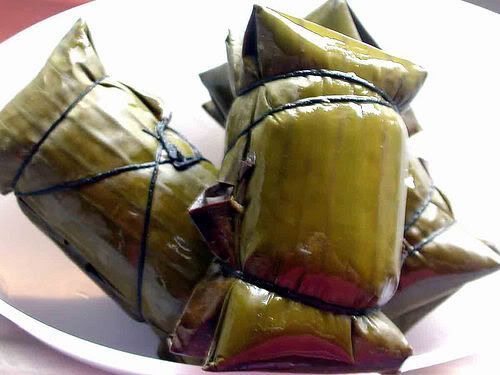
Suman for others!

First of all, I realized that I actually got to know Clair this year, mainly because this was the year that iBlog first happened, so I'm sorry about that error. Considering how I kept count of every conversation we had, this was highly unusual. Still, poring over hundreds of blog entries like what I'm doing on a regular basis to pull this retrospective off does kind of take its toll on me.

I was in the thick of my career, and the not-so-pleasant tailend of a relationship that showed how I woefully misunderstood what it means to love and to care about someone. It was supposedly a very happy thing when I got into my second relationship, but in reality? It was pretty much a travesty all around because I was flat out clueless what it took to make a relationship work. years from then, I look at myself now, and I realize my knowledge is still far from perfect, but I definitely saw so many thing I did wrong then that I wouldn't even consider doing now.

And I have a confession: a lot of my blog entries in 2005 really make me cringe today. I was very cavalier with privacy, and it may have been very embarrassing for the people I blogged about back then the way I wrote about them, no matter how positive I might have thought it was that I wrote about them. I still write a lot, and I still say a lot of crazy things, but one thing I feel just naturally changed over time was how my writing has been far less incriminating for other people I write about. I've gotten far less detailed and transcript-y, and this was actually a change for the better, I think.

I remember this year because it was the year where I worked for Channel 11 alongside doing radio, and I was ridiculously exhausted because of this setup. I can't imagine how my friend, DJ Aya of WOW 103.5, is doing the same thing nowadays, probably only worse. I was going through rather trying times, but overall? I was just so head over heels in love with Pomelo at this point that it seemed I was just gliding over everything that wasn't going so well in my life.

And yes, that included the first signs that showed me that the academic life wasn't really quite for me.

But one overall running theme during 2005 was suman. It happened mostly because of Dean Alfar's talk on creative blogging, and it sorta stuck for a pretty long while when a few of us who went to the talk decided to blog about suman on a weekly basis. I lasted pretty long doing that, actually.

It was the beginning of amazing things, to be honest. As I went ahead and got to know bloggers left and right due to iBlog, I also met the Sassy Lawyer, who pretty much recognized me because we've corresponded with each other in the past. And yes, iBlog was when I first met the (in)famous Mike Abundo.

2005 was a pivotal year because it was a year of huge changes: changes that would really dictate the pace in succeeding years, and 2006 was definitely going to be even more of the same.

But wow. I really cringed a lot going through my archives, so I'm thankful I managed to find this essay I wrote about the Digital Filipina issue. Amid all the jokes about the gay innuendo and amid all the cringe-worthy things I wrote about, I felt pretty good about the fact that I was writing with a very progressive slant more and more in 2005. I was starting to quote feminist/anti-ableist/anti-racist/pluralist material and echoing these sentiments even if in 2005, my notions on gender equality weren't as informed as they are nowadays.

It feels good to know that I came to my own personal journey against bigotry without any earth-shattering moment. That I quietly just realized how wrong bigotry was, and proceeded to work hard at educating myself over the years. Does that deserve any respect or adulation? Of course not. It's what all of us should be doing in the first place. I'm just glad I figured it out with minimal anguish.

Wednesday, October 17, 2012

The 10th Anniversary Retrospective: 2004

.:The 10th Anniversary Retrospective: 2004:.

Well, crap.

I used to be so thin back in the day...

So I opened 2004 with the highlight of finding out that I won the Asian Blog Awards from Flying Chair. Considering how 2004 was one of my most active blogging years of all time, it was a doozy!

One thing I noticed was that 2004 was arguably when I got the most detailed when it came to blogging. I was transcribing conversations word for word in my blog, and it was pretty insane how religious I was in writing, period.

Graduation really changed the dynamic for me because immediately upon graduation, I quickly moved on to working. I was teaching, I was on WAVE 89.1, and I was taking up my masters, all at the same time. I don't know how I managed to do all of that together at the time, but then again, I have a day job, magic, comedy, improv, and radio all going on at the same time at the moment. I guess keeping myself busy is really where it's at.

I was doing a lot of writing, including this short story series that heavily referenced something going on in my life, and it was during this time that I started being very good friends with Sacha, Peppy, Clair, Krisette, and Kathy. These friendships were really taking root, and of course, in 2004, I spoke a bit about Rowena, who had the best birthday greeting for me way back then.

Looking back at what I've written, it was a pretty amazing time, especially when I consider all the friends I made and all the experiences I went through in 2004. It was a huge point of transition for me, especially when you consider that this was the tailend of my first ever relationship, which lasted well over five years. I didn't realize I was so into poi at this point already.

The entry that best encapsulates how I was during these times must be the one where I wrote about the World of 9:00PM on a Tuesday, which is probably one of the saddest things I've ever written, when I think about it.

Man, I think despite being crazy detailed and wordy, I really had something good going on in 2004. And I was so thin back then! Oh, well. That feels so long ago. Like, so 50 pounds ago.

Tuesday, October 16, 2012

The 10th Anniversary Retrospective: 2003

.:The 10th Anniversary Retrospective: 2003:. 

 In 2003, I got into Livejournal, and it was quite a doozy as my blogging really took off. At some point, I just started breaking up my thoughts into headings as I currently do, and that's been very helpful in getting me to write a lot more.

I started doing Philosophy thesis statements around this year, which really got me into considering whether or not I should teach after graduation. I was ridiculously grade-conscious, I picked up the words "ruddy" and "Hades" and one of them never left my personal vocabulary, and so many other habits really started kicking in. I think I really established my writing personality by then, and despite changes here and there, it's mostly held.

I was in the running for the Flying Chair's Best Philippine Blog in the 2003 Asian Blog Awards at the time, although the results for that came out the next year. It was really a crazy time for me, and yeah, I was doing a lot of ranting, especially when it came to the fact that FPJ was making it known that he had plans of running for president in 2004.

I was a complete Philosophy junkie by the time I kicked off the year. I was waxing philosophical about anything and everything, and I was filled with inside jokes galore, and it was very clear that I wasn't even trying to write for an audience.

Nonetheless, it felt great and liberating to blog my thoughts unperturbed the way I did. I was writing all sorts of things, and I even came up with a bit that ended up in the Matrix Essays, and I wrote it before Matrix Revolutions came out. A few months later, the article ended up proving prophetic, as it actually accurately predicted the ending of the Matrix Trilogy, which is why I'm exceptionally proud of the entry, perhaps even surpassing this series of posts, where I answered Dr. Bulaong's thesis statements in great detail.

I know, he wasn't a doctor yet at the time, but whatever.

It was during this time where I hung out a lot with the Wednesday group in DLSU and the Otakuboards really occupied a lot of my life and time. Pretty crazy for a guy who didn't own a computer at the time, really. This meant I was typing out all these blog entries in the computer labs, under a time limit.

In any case, inasmuch as I'd like to blog about all of this at length, I must admit that I'm far too preoccupied today because someone very special has been spending the day with me, even if only by Skype.

I'm not gonna blow it this time.

Monday, May 10, 2010

Solutions, Elections, Delusions

.:On Election Day, Be A Part Of The Solution, Not The Problem:.


Whoever made this image, I thank you.

If you’re not part of the solution, you’re part of the problem.

Nation, allow me to remind you exactly what’s at stake at the wee hours of the morning as some of you pore over who you wish to vote for the last minute. I struggled all day to write how I felt about this, but I couldn’t quite find the right words.

One of the few things I still value about my time in Ateneo was the fact that they made me feel it was a stereotype for Ateneans to be apathetic. They drilled it home so well, any person who had the least bit of love in his heart for the country would feel defiant about such a label: I was anything but apathetic. I admit I made some mistakes in my attempts at taking part in voicing out my ideals as a Filipino citizen (After all, I *was* in EDSA 2...). As I moved on into the blogosphere, it felt like armchair activism was cool and hip and edgy, until the wakeup call of the infamous Valley Golf incident made me realize that you need to temper wild opinions with some measure of responsibility.

True, we’re not journalists. But we shouldn’t be rabble-rousing hacks, either.

I believe that the time for apathy is not now. I’ve heard it said and said again by many people: “wala nang pag-asa ang Pilipinas.

Nation, as a patriotic Filipino, this sentence grates on me. For almost a decade, we allowed someone to run roughshod over our country and reduce it to a laughingstock. Every excuse, every technicality, every loophole was used and abused just to keep holding onto power for as long as humanly possible. Today, she seeks to hold onto the power for even longer, as she insists on staying in “public service” by running practically unopposed in her Congressional district today. I’ve been writing about politics for a long time, but in 2009, something in me just clicked. Something in me just fell into place.

In 2009, I found myself writing about politics for The POC, At some point, I found my voice. I discovered the best way to highlight the things I perceive to be wrong in this country, not through rabble-rousing or ambulance-chasing, but in being an uncomfortable parody of an administration sycophant who would spin everything that he sees so that we could all realize “this could only mean good things for GMA.” I became a caricature of every trigger-happy blogger who lived to spread wild lies and accusations. Some were uncomfortable because it reflected a culture online that is so deep-seated and irrevocably prevalent, while most were oblivious to the levels of wrongness I sought to lampoon beyond merely being a GMA sycophant.

I parlayed laughs and sometimes shocks into a robust character that has managed to capture the heart of everything that is wrong about the Philippines as of late: someone who doesn’t care how bad things are going, so long as they don’t feel affected by it. The kind of pathetic excuse for a man who would probably never give Kitty Genovese the time of day. I revel in this character not because it reflects who I am, but because it underscores precisely what it should mean to be that kind of a human being in real life: pathetically laughable.

I still feel indebted to Chip Tsao and Stephen Colbert for this newfound passion to be able to write the way I do about politics, but this isn’t about my origin story, really. It’s about the fact that today is the day where everybody gets a chance to make a difference, the way I sought to do when I started writing the way I did. In all honesty, you don’t even need to write 800-1000 words on your word processor like I do. You actually just need to do one small thing I can’t do: you just need to shade a few circles.

In the interest of disclosure, I am disenfranchised. I won’t be able to vote later, but I refuse to be a part of the problem. This is why i’m making a stand not just in advocating for my candidates (My senatoriable list is very public. My presidential choice? Not so much.), as I stand by the likes of Susan Ople, Ruffy Biazon, TG Guingona, and Rissa Hontiveros, to name four of the most important names I feel, coming into the elections. Or maybe supporting “Ang Ladlad” as my party-list sounds weird since I’m straight, but the more I think about it, the more I believe that these people who fought for their right to be represented actually deserve to be represented, rather than a group of security guards who think that Mikey Arroyo would espouse their ideals.

I don’t know if fighting Hayden Kho is the reason, but it boggles my mind people want Bong Revilla. I don’t know if holding a knife in front of Lito Lapid’s one law would make it two laws, but people complaining that Noynoy has done nothing in the Senate have no right to complain if they’re voting for Lito Lapid in turn. But lest this turns into a slagfest for politicians I don’t particularly care for, let me just emphasize that while I am incapable of voting today, I still insist on doing my part to more than make up for it. You can probably do something I can’t today, and that’s shade some circles. So goddammit, go shade those circles!

Seriously, nation, knowing that you really just need to shade a few circles, would it be too much effort for you to even just think about which circles you’re going to shade? Whether it’s your councilor or your Party-List or your president, you owe it to yourself to make a choice that you believe is the best choice you can make. You owe it to yourself to not sell your vote, or to make a joke out of your ballot by, say, voting for disqualified presidential candidate Vetellano Acosta.

I’ve said it once, and I’ll say it once more: screw the surveys. They are numbers that tell you nothing about the candidates. The only survey that matters is the one happening today. I may not agree with who you want to vote for, but I’ll defend your right to vote for the candidate you want, guns, goons, gold, or call center management shenanigans be damned.

As the continuation of the Marcelle Fabie character hangs in the balance, the real me reflects on the apathy that surrounds him and takes a stand against it. Coming from a country that has been plagued by compromises and a lack of ethics so long as legalities are danced around; coming from a university that looks the other way for plagiarism when they need buildings and then overcompensating when one has none to give; coming from an online culture that shoots first and asks questions later; coming from a sector of society that feels a bit of intellectual masturbation is enough to earn the right to be called an “activist”; yes, the future seems bleak. Yes, evil has a foot in the door and can very well triumph.

Despite all that, I am a patriotic Filipino in that my faith in the country runs far deeper than just watching Manny Pacquiao’s fights: I believe that this country is filled with good people from all walks of life. I believe that we are surrounded by a climate of goodness, no matter how bad things may get. However, I must point out, as a man greater than I once said, that for this evil that permeates us to triumph, good people simply need to do nothing.

The apathy, the willingness to be a part of the problem instead of the solution is all evil needs. The resigned sighs, the hands being thrown up in the air (And waved like they just don’t care.), the cynicism, the jadedness, the culture of compromise, all of these have led us to a crossroads we face on this day. Don’t tout the “I’m gonna migrate anyways” escape button as if it’s truly a solution. Don’t tell me “you don’t care” and then proceed to whine about the government for the next six years, when you did nothing to fix the problem.

It’s time to do something. We want our politicians to do something, yet we go there to the polling precinct, randomly check of our six councilors, then expect things to be better? I guess it makes sense, then, that politicians represent us best, since a huge swath of us don’t do anything, too. Truly, we get the government we deserve.

So today, be a patriotic Filipino. One-up me, despite the numerous people I have convinced to vote for people whom I believe will be good for this nation: go out there and actually vote, and make that vote stand for something. Vote because you’re sick and tired of nine years of the same old crap, and you want the biggest going-away party ever 51 days from now when the Countdown To Stepdown finally hits 0. Vote because you want what’s best for your nation. Vote because you want to have the right to complain about the government some more. Vote because for once, you actually hold the power. Vote because migrating and starting over again really sucks. Vote because you don’t want the status quo to just keep going. Ultimately, vote because it’s your God-given right. If you’re atheist, vote because it’s your fucking right.

Nation, I refuse to be a part of the problem. I have faith in you that whether or not you read this, you will make the same stand on this day as well. Today, we will be a part of the solution. Let us throw away all naivete and wishful thinking: we know our leaders can’t do it alone. Your vote is far bigger than just shading dots on pieces of paper: your vote is a renewal of your covenant to your nation. As Manolo Quezon put it, if yesterday was the day for our mothers, today is the day for our motherland.

Long live the Philippine nation, and long live the Filipino people.

Thursday, March 18, 2010

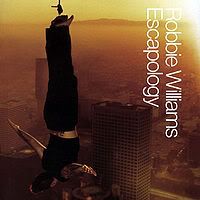
Project 365 (77/365): Robbie Williams's Escapology

And finally, the backlog has been cleared out! Whew.

.:77/365: Robbie Williams’s “Escapology”:.


Yes. I meant the album.

I wanted to go and talk about this particular album, if only for its title. I like Robbie Williams as a musician, and ultimately, he’s one of the better performers of our generation.

This album was sort of a coming of age for Robbie. It was his fifth studio album, and it actually marked his noticeable increase in creative control over his album. He parted ways with his songwriter, Guy Chambers, and started writing more songs in the album himself, as well as redoubling efforts to actually break into the United States, which he last achieved with his debut solo album, The Ego Has Landed.

Anyways, I think the title of the album really suits Robbie and the way his life really is, because he’s a very misunderstood genius, in my opinion. He has had numerous songs, and his talent is definitely immeasurable, but he’s always had the problem of not quite finding out how to break free from his demons and given the Take That reunion, his past.

Escapology as a magical art is aspirational and symbolic to most people who watch it. The excitement of seeing a man in mortal danger for our entertainment cannot be denied, but neither can we ignore the sheer joy that comes with seeing the escapologist succeed, and us living vicariously through his very success. It speaks to us of the escape that we seek and crave from the mundane, from the dreary, and from the mediocrity we beset ourselves with in daily life.

With every chain, every rope, every lock we liberate ourselves from, in the audience’s minds, they are reminded that they can break free from their own bonds as well. The bonds of bad governance. The bonds of apathy. The bonds of underachievement. There are so many things wrong with this world, but escapology, as opposed to mere escapism, shows us that those who wish to make a stand can and will find ways to break free. It’s not merely about getting away from something. It’s about ending the cycle and breaking past it.

We all need a little escapology in our lives, I guess. Whether we need to escape from the problems we’re dealing with, or we need to escape frivolous accusations against our reputation, or escaping Being itself (Thanks for nothing, Levinas!). Give the album a listen, and take note of the song entitled “Come Undone”. I’m pretty fond of that song.

Wednesday, April 22, 2009

The Bebigerls: Misguided Glorification

.:Finally, I Chime In:.

If they are free to blog and write the way they wish, then I believe I should be free to wonder about them in this manner as well.

A few weeks after the Bebigerls issue has somewhat died down, I've decided to mull things over and talk about it, now that hopefully, nobody would care that I talk about them.

For the sake of disclosure, I am an intellectual elitist, and I am unapologetic for it. I communicate my thoughts as clearly as I could, and if for some reason, I cannot express myself in English, hindi ako mag-aatubiling Tagalugin na lang ang gusto kong sabihin.

Initially, when I saw the site, and its declarations of "straightforwardness to the point of rudiness", I must admit that the grammar Nazi in me laughed and cried at the same time. It's the way I am. I find horrible grammar and spelling (In both languages.) funny and depressing at the same time. As a former English teacher, I couldn't help but facepalm, to be honest. I understand how horrible this may come off to people reading this right now, but I was brought up to respect language. If you intend to speak a language or write in a language, my implicit expectation is that you do it competently, at the very least.

So yeah, we had our lulz, and we chuckled at their poor grasp of English and even their poor grasp of the Filipino language, but a deeper trend that I noticed in them compelled me to write this post, and that's what I'd rather talk about, because as they said, "our English sucks, but the hell we care!" It doesn't really mean anything to them, and insulting them further will make me lose the point I wanted to bring up here...

.:A Trend That Bears Watching:.

In the 80's, moral guardians were upset with a lot of things in the local film industry. Sure, we had the requisite "ST" (Sex Trip) films that alarmed moral guardians, but for once, they were also disturbed by the action films that were being offered by the major movie producers. With films like "Baby Ama", "Alyas Pogi", "Bad Boy", and so forth, it seemed to be the case that these action films were glorifying the lives of criminals. Some of these so-called biopics were really just excuses for a shoot 'em up, but what moral guardians found alarming was the "bida" of a lot of 80's action films was not a hero at all, but in fact, an anti-hero. Ironically, this is one time where we were way ahead of the curve, as it took the 90's for America to realize how "cool" anti-heroes are.

Anyways, I digress. In the 80's, films about the life stories of certain criminals became the norm, and they were lionized in the eyes of the public. It communicated the wrong values to viewers, especially if somehow, an impressionable kid got to watch the film (Most of these films were PG-15, if I'm not mistaken.). The reasoning was apparent: these movies made it cool to be a criminal. As long as you have a heart, as long as deep down, you're a good person, your crimes don't matter.

But wasn't it Batman who said, "It's not who you are inside, but what you do that defines you?"

.:The Dealbreaker:.

I am not a moral guardian. Despite being an ethicist, I do not seek to impose my standards upon others if they are not within my circle of influence. In fact, for the most part, as long as they do not impose their own behavior upon me, even within my own circle, I tend to live and let live.

I do not subscribe to the Jack Thompsonesque way of thinking: blaming anything but a person for their own actions, using media, video games, or any other factors. Responsibility cannot be ignored, and these outside factors don't necessarily affect people all the time.

But that they are capable of affecting certain people given certain circumstances cannot be denied. It is not my intention to rail against these factors, but it is my intention to analyze how this has led to a way of thinking that I found alarming when I read the Bebigerls blog. It is a way of thinking that is alarmingly becoming more commonplace, when you look at it.

Like the criminal biopics in the 80's, people now find that it's cool to be a "bitch", or to be a "slut", or to be any other derogatory term they label to themselves. I'm not immune to this. I, for example, take pride in being a "jack@$$" sometimes, particularly when I find myself embroiled in an argument. I'd like to think that it's not my defining trait, though. I can be a jack@$$ at times, but I'm known more for telling it like it is, and if that entails being a jack@$$, then so be it.

So I hope you understand my consternation when I see people calling themselves "sluts' and being proud of it. I don't intend to change them. I just think there are better things to aspire for than to be known as a "slut" or a "bitch" or a "prick", for that matter.

I won't pass judgment on the quality of people the Bebigerls are. For all I know, they might be great human beings deep inside. But it is what they do that defines them, not who they are deep inside, and if their tag cloud is any indication, then there is a disturbing emphasis on "kalandian". They are defined online as a bunch of people who want to be known as "Devil Bloggers". It boggles the mind.

I don't get it. Since when have people found these things worthy of aspiring for? How is this becoming a goal in and by itself instead of a mere side effect of a quirk of your personality? Even the 80's films took the pains to emphasize that even the most hardened criminal wants nothing but to have a simple life and to be loved by someone, as incredulous as that may seem. Fame is a shallow but understandable goal. Fortune is a perfectly understandable goal. But this? Why?

I try to understand where this kind of thinking comes from. I try to contemplate how a human person's function of excellence could possibly be by being a "bitch" or a "prick". Aristotle didn't call it a higher value that the human person aspires to, but merely the fulfillment of his function. To excel, to flourish, to be eudaimon, is a goal that may take many different forms, but is ultimately a worthwhile course of action. Attaching labels like these to yourself and making it your defining characteristic is far from it.

Was this a product of upbringing? Was this a product of an internet culture that finds fans for even the least laudable causes? I'm not a sociologist who can look at the bigger picture and see what factors could possibly lead to this kind of a net culture. Do they recognize this about themselves? Or is self-awareness too much to ask for?

I am not here to tell the Bebigerls that they're wrong, or that their English sucks. Been there, done that, and doesn't help them one bit. What I am doing here is trying to understand how our culture has gotten to the point where such shallowness and triviality has become pursuits for people to aspire for. To me, this is ultimately a pursuit for understanding.

Your life, your rules. It's easy to say that there's more to you than this, but when this is all you show for public consumption, does it not make sense to feel a tad concerned?

What do you think? Is this really a trend? Or just an isolated case?

Wednesday, February 25, 2009

Philosophy 118: 20 February, 2009

These notes were taken from my class with Dr. Reyes for Philosophy 118 last 20 February

.:A Review Of Wittgenstein:.

There are two eras for Wittgenstein: the Trachtatus era to the Philosophical Investigation era. From a philosophy of being, Wittgenstein wishes to move towards a philosophy of language. We are, after all, immersed in language. We cannot directly contemplate being. We can only reflect on it through the mediation of language.

The first Wittgenstein saw language as picture theory. The second Wittgenstein saw it as a language game or language according to use, or even ordinary language philosophy.

The first Wittgenstein understands language to be understandable only when broken down into elementary statements. This is because early Wittgenstein believed that language can form logical pictures of the world which are verifiable as true or false. In effect, this is a logical atomism. That these atoms may be constant in number is, as such, only varied by the positions of such atoms, allowing for the verifiability of the veracity of a particular proposed position.

Soon after this, Wittgenstein realized that this viewpoint was far too simplistic. Not everything boils down to a question of veracity. One concatenation of atoms can hold various meanings, depending on what language game is at work. At this point, Wittgenstein found his earlier picture theory to only be one type of language.

Each language has its own rules that expresss its own form of life. Each language is autonomous. There is always a community that acknowledges this language. This language ultimately requires participation. Scientific language holds no special place among other languages. Each language sets its own rules, and its verification is not in directly observing reality, but in its conformity to the rules and all the norms that follow in the language game at work. All these languages are performative, not descriptive, as counterintuitive as this realization as it may seem.

For Wittgenstein, philosophy is not a language in itself. It points to a way of life, but is itself not a way of life. As such, philosophy, for Wittgenstein, is empty as a way of life because it creates a false problem in using one language to critique another language, when they should instead be autonomous.

As disturbing as this may seem, we know that the first Greek philosophers came from their slow but gradual departure from mythical religion. Realizing this is not wisdom, they sought true wisdom. From the point of view of Christianity, Greek philosophy was the religion of the day. As such, given this, would it not make sense to consequently discard Greek philosophy?

.:Husserl and Wittgenstein Converge In The Community:.

Both thinkers agree that you don't go directly into being. As part of the Lebensweldt, Husserl emphasizes the importance of the community. We are never in the realm of being, but always in the realm of meaning.

.:Quotable Quotes:.

“Back then, before Bobby Guev, before Fr. Dacanay, the theology department had lousy teachers compared to the philosophy department.”

- Dr. Reyes, major burn on Fr. Roche

Thursday, February 19, 2009

Philosophy 118: 18 February, 2009

These notes were taken from my class with Dr. Reyes for Philosophy 118 last 18 February

.:A Review Of Husserl:.

Phenomenology tackles man as conscious being experiencing not just himself, but experiencing everything else. The difference between the study of being and being conscious of being is that the consciousness is not entirely passive or entirely active, but rather, one that mediates the encounter between itself and the given. This mediated encounter is what we come to understand as meaning.

For the phenomenologist, man is self-awareness, man is temporality. For the scientist, man is the only animal that has opposable thumbs, wears jewelry, buries their own dead. While there is conflict in them, the phenomenologist emphasizes that despite the lack of empirical data, any human being will find these experiences in him.

.:The Limited Description:.

Man has a concept of time. Time is a succession of moment after moment, albeit strictly speaking, time is a slice of time-space. In science, the only moment that exists is the moment in the “now”. The past is obliterated, the future has yet to exist.

In contrast, the phenomenological time is concerned with the “now”. While we say that this is the present, it does not correspond to the present we understand in the scientific perception. Phenomenologically, the “now” is partly determined by the past. The present is also affected by an anticipation of the future as well, and it moves towards it. Implied in this is a sense of the self. After all, the only reason man has a sense of past and future is because it has a sense of the self, a self that is continuously there. This is why we feel guilt because of our reference to the past, and we feel hope in our reference to the future.

.:Quotable Quotes:.

“What the hell is the Solvay Process?”

- Dr. Reyes

“A cat buries its own $4!7, but it doesn't bury its own dead.”

- Dr. Reyes

Philosophy 118: 16 February, 2009

These notes were taken from my class with Dr. Reyes for Philosophy 118 last 16 February

.:Scientific Language Is Only One Type Of Language:.

It is like a net that filters out a lot. While something cannot be empirically viable, it could have perhaps poetic or religious worth.

.: More On The Nature Of Language:.

Though experiences are inalienable, this does not preclude them from being communicable. A sneeze is a personal sneeze, but you will be able to understand what it means when another person sneezes. The language makes sense because it is a shared language. It is shared because standard within the language exist to allow it to persist.

As such, each language is an autonomous language, insofar as each language has its own rules which will not necessarily correspond to the rules of another language. As such, a priest cannot impose his standard as a religious authority upon who he believes his parishioners ought to vote for during the elections. Insofar as a language is autonomous, it means we preclude ourselves from having our say in it if we do not participate in the language, which means that it is not appropriate for a person completely uninitiated to sports to attempt to speak about sports since that is not a language they find themselves privy to.

Language is not just a question of making empirical sense or not, but rather, of the ability to follow the rules set within the language it finds itself in. Philosophy is not about moving beyond language and approaching the infinite truth. The function of philosophy becomes mostly therapeutic rather than eschatological. It makes man aware that there are multiple languages, and one must not attempt to mix these varied languages. This is why Wittgenstein believes one should not stay in Philosophy but rather, to participate in the many other languages philosophy opens us up to. Philosophy doesn't offer you any new insight, per se, but merely awareness about these insights as well.

.:Quotable Quotes:.

This is the story of a Swiss doctor who found a cure for impotence in men. He takes the fetus of a baby elephant, takes the trunk, and implants it on the man. A man enters the clinic and asks the doctor to perform the procedure on him. So they go ahead with it, and the doctor tells him to come back one month.

A month later, the man comes back. The doctor asks him, “how was the operation?”

“Oh, excellent! Excellent performance! There's only one problem, though...”

“What is it?”

“Everytime I'm at a cocktail, it likes to go out of my pants to reach for some peanuts...”

- Dr. Reyes's joke

Philosophy 118: 13 February, 2009

These notes were taken from my class with Dr. Reyes for Philosophy 118 last 13 February

.:Wittgenstein, Continued:.

Everything stems from the ambit of language. Upon gazing at being, you already find yourself in the trappings of language. Insofar as he wishes to be able to determine the veracity of statements by breaking them down into elementary propositions until each elementary proposition can be properly evaluated, as it were.

Philosophical problems, to Wittgenstein seem to be false problems. These are problems that cannot be properly responded to, and do not seem to affect how one carries out his life, either way.

.:The Color Scheme:.

Aside from the realization that the language in Trachtatus is solely descriptive language and other types of language certainly exist, Wittgenstein understood the color scheme to also be a weakness of his initial ideas.

While the sun can shine or not shine, colors don't seem to follow the same logic. Something that is not blue is not necessarily a particular color, after all. The same with measurements. “Not 4 meters” could be “4 miles” or “4 inches” or whatever other possible value.

At this point, Wittgenstein slowly forms a new viewpoint on language. Here, he writes the book “Philosophical Investigation”.

.:Philosophical Investigation:.

Wittgenstein shifts his thesis to language as use instead of language merely as picture theory. Language, specifically, ordinary language is likened to a game, as such. In contrast, descriptive language is rather contrived.

A game is governed by rules, just like language. A game is also autonomous. What determines what is good in a game is its internal system, not an outside authority. The game is also communal, in that you cannot play the game if you cannot agree upon the rules of the game. The rules have to be shared by all players involved. The game also requires participation, as you are not wholly fit to critique something you are not a part of.

Each language is an expression of a form of life. Whether humorous language, or dramatic language, or whatever else, they all follow their own boundaries.

Philosophy 118: 11 February, 2009

These notes were taken from my class with Dr. Reyes for Philosophy 118 last 11 February

.:An Introduction To Wittgenstein:.

Wittgenstein's philosophy is a gradual progression from a philosophy of being to one of language.

Language is made up of elementary propositions. These are statements that do not need to be broken down into various parts the way complex propositions would be. It is composed of a name and a relation to another name. “I (name) put (relation) the chalk (name) on the table.” It follows a certain rule of grammar, for starters. Each name will correspond to a simple object. If the state of affairs is possible, then you can analyze it closely enough to determine whether or not it is true or false.

Complex propositions involve the like of “Philippines is a poor country”. Who is Philippines? Where is the country? What is the sample size that is sufficient? What does it mean to be poor?

Thus, the problem with Philosophy is that many statements are too ambiguous with their propositions. The stand of the Trachtatus is to simply break down complex propositions into elementary ones.

.:Exceptions:.

“And yet, there are some statements which seem to be non-sensical, yet admittedly, are useful.”

1.Religious statements: “I believe God exists” may seem non-sensical in that “God” cannot be determined, insofar as the conventional way we determine God to exist. But this is useful in that an affirmation of God is not an affirmation of a fact or an event that comes to pass. It implies that in taking consideration of the totality of the world, somehow, one can believe that God exists. This is not a statement on a possible state of affairs, but a stand in view of the totality of the world, as it were.

2.Aesthetic statements: “It is beautiful” again takes the totality of something into consideration, and it has a certain effect, where one can see beauty.

3.Moral statements: “Killing is immoral” is a bold statement as it cannot be determined without looking at the totality of things in the world whether or not something is immoral.

4.Philosophical statements: Language has been established by Wittgenstein to be the vehicle by which we can represent a possible state of affairs, as well as its veracity. In contrast, philosophical language is a metalanguage. It is not a possible state of affairs but a view into the nature of language itself.

Such statements are simply therapeutic. There are certain ways of using language which does not make sense, but at a certain point, we come to certain problems of language. Once these problems are solved, philosophy is meant to be abandoned. This is why Wittgenstein doesn't want his students to stay as philosophers.

These exceptions explain precisely why Wittgenstein is *not* a logical positivist.

.:Perhaps He Was Wrong?:.

Wittgenstein had doubts about the completeness of his work because of various reasons. For one, he realized that some words do not represent simple objects. A number is not merely a simple object, but an activity. He discovered the existence of performatives.

As such, when you are commanded to do something, it cannot be a “true” or “false” statement. While some language is descriptive, but other language is performative.

.:Quotable Quotes:.

“Philosophy is like a ladder. Once you get to where you need to, you can kick off the ladder. Philosophers instead stay on the ladder, and insist on asking, 'what does it mean to be a ladder?'”

- Dr. Reyes

Philosophy 118: 06 February, 2009

These notes were taken from my class with Dr. Reyes for Philosophy 118 last 06 February

.:In Depth: The Lebensweldt:.

Consciousness is not solipsistic. It is in connection with other consciousnesses, and as such, these various consciousnesses inevitably impact each other. They are in a common world, and are co-constitutive of common meanings.

Sometimes, we see ourselves in our own world, watching the world as the hustle and bustle of banality around us. We find ourselves completely unaware of the fact that these other consciousnesses are just as perceptive as we see ourselves to be. That in the end, we are just another part of this hoi poloi that we see from seemingly detached eyes.

This network of consciousnesses includes an indefinite community of mankind. Though you may not see the face of each and every man, this network exists and encompasses all. You become one of many, and no longer a solitary being perceiving everything else. Thus, the mode of communication is no longer introspection, but dialogue. None of the insights we come to came from solitary introspection, but in dialogue. As such, these ideas we arrive at are not derived from a vacuum, but in reality, a co-constitutive effort by the lifeworld.

As such, we have a dialogical and hermeneutical kind of consciousness. Husserl calls the initial individual consciousness as the result of an eidetic (essential) reduction. Compare this to the way meaning is generated and regenerated by the network of consciousness. These are the fruits of a cultural community. As such, the meanings are already in place before we even begin to employ phenomenology. This means that you are in contact with primordial meanings: meanings that did not originate from you.

Even though meanings may be formed by co-constitution, phenomenology's role might be in explaining the gaps that may exist in a commonly held meaning, not in an eternal, immutable form, but more likely in an experiential, and still dialogical manner.

.:Quotable Quotes:..:Part Of That World:.

In the Disney film, “The Little Mermaid”, we discover precisely what it means to be a “fish out of water” for someone like Ariel. She was part of a particular world-view, and was very much as capable of being as solipsistic as can be the minute she had legs and could walk.

Despite that, isn't it a wonder how she, in time, manages to be a part of the world of meanings that is formed by the world that she initially is not a part of? Is this underscored integration of Ariel not the very essence of what it means to be a part of a particular lifeworld?

When we look at how she wanted to be a “part of that world”, the kind of awestruck wonder she saw in things we surface-dwellers take for granted and banal, isn't this a fresh look at the routines that we often no longer give meaning to?

Philosophy 118: 04 February, 2009

These notes were taken from my class with Dr. Reyes for Philosophy 118 last 04 February

.:The Limited Description:.

While everything starts from consciousness, this is not to say that this is purely a Cartesian system. Rather, this is a transcendental consciousness.

There is no being-in-itself. There is only conscious being. Man, as being, is conscious of the self, conscious of the other, and conscious of the world. Despite this, one can see that there is more than a merely material difference between an object and another person. If anything, there is a phenomenological difference that is inextricable to any man who honestly attempts to look at the difference.

The Phenomenological approach finds a lot of strength in that it is grounded in experience rather than mere theory. Despite that, at some point, theorizing becomes a necessity, for instance, in the case of explaining the phenomenology of death. At this point, one realizes that it does not begin with the consciousness, but with the consciousness of the other.

Thus, the world we form is not a world we constitute through our ego, but one that we co-constitute, in reality. It is a historical, cultural consciousness.

.:The Lebensveldt:.

As a lifeworld, phenomenological experience is not merely a solipsistic endeavor, but instead, dialogical, and even hermeneutical.

As such, phenomenology is, at best, a cultural critique of a phenomenon that is already in place.

.:Quotable Quotes:.

“Some men have stared at me, as if divesting me of my clothes.”

- Dr. Reyes, much more fun when quoted without context

.:The Gran Torino?:.

If you've seen the film known as “Gran Torino”, you would understand what it means to have a “consciousness of the other”, vis-a-vis being trapped in your own Cartesian world of solipsism. I'd wax on and on about this some more, but I just suggest you watch the film so I don't spoil anything for you.

Philosophy 118: 30 January, 2009

These notes were taken from my class with Dr. Reyes for Philosophy 118 last 30 January

.:Husserl's Technical Terms:.

Intentionality – There is no consciousness except in relation to the given. There is no given except in relation to the consciousness.

Constitution – The given does not merely imprint upon a passive consciousness what it is. This interaction is what is called constitution.

Natural Attitude – Our attitude in daily life that is mainly concerned with mere practicality.

Epoche – A break from man's natural attitude.

Phenomenon – The meaning that we find after observing the thing while in epoche. Whatever it is that appears to consciousness. It is something that can be experienced.

Eidetic – When you have gone into the epoche and honestly looked through your own experience, you will be able to find things such as the sense of the self. These realizations are not purely subjective.

Noesis-Noema – Noesis is an attitude that corresponds to a particular meaning called Noema. For instance, when you look at a painting, you use a particular noesis of aesthetic valuation and the noema you derive is affected accordingly.

Transcendental Ego – This ego is *not* divine. There will always be a consciousness that subtends every single state, for even asking about the existence of anything before even man existed, it still presupposes a consciousness that is posing this question. It is that which is at the bottom of any experience, saying, even being itself, that cannot but be presupposed.

Consciousness – As such, the consciousness can be broken up into various phenomenon, such as the self, “I am my body”, in relation to the world, in relation to the Thou, in relation to the social, in relation to time, and to history.

As such, Husserl has systematized phenomenology such that at the bottom of everything is consciousness. It is not absolute in that it is divine. It is absolute in that it encompasses everything.

.:Metaphysics vs. Meaning:.

Metaphysical conclusions are a product of logical inference. Meaning is present and can be experienced, even if it is not objectively there. For example, the sense of the human dignity. Is not the middle finger merely an upraised finger among five? Yet it carries with it an insult upon a human person.

Any human person who is honest to himself will find deep in his heart the absolute, and a longing for meaning.

For Aquinas, there are certain universal attributes that are present in every particular instance of a specific class or genius. For instance, all human persons have, say, a sense of humor. There are, however, certain attributes not just in some class or other, but in every being. These are called transcendental attributes: one, true, good, etc.

For Kant, on the other hand, speaks of consciousness, but when Kant says this, he does not pertain to the Cartesian consciousness that closes upon itself, certain only of its own existence, but not much else. Kant's idea of consciousness is open to anything and everything, one that determines or constitutes categories on top of the sense data. In that my consciousness transcends my limitations, then we can say that my consciousness is transcendental. As such, the transcendental consciousness is that which is always presupposed in the human experience. You simply cannot do without it.

.:Quotable Quotes:.

Pare, you're smalling me.”

- Dr. Reyes

“When husband and wife argue, and maybe I'm saying it from experience, one of the worst things in the woman's armament is that they will pretend that you don't exist and completely ignore you.”

- Dr. Reyes

.:The Hermeneutics Of Suspicion:.

Hermeneutics is precisely what colors an entire phenomenon that one experiences, if only for the fact that the same event can be give different interpretations each time it is perceived. This is the nature of hermeneutics, and as such, one can say that there is a certain trend at times we have come to know as the hermeneutics of suspicion.

Think about two of our previous thinkers, Marx and Nietzsche, who are regarded as two of the three “master of suspicion”. Their philosophy is precisely a particular interpretation of the world around them, and their response to the call of the times they find themselves involved in.

We may say this is exactly what it means to have a “hermeneutics of suspicion” in that they viewed everything with wariness. Religion was either thought to be an “opium for the masses”, or an outright fraud, the intentions of people were taken to be not without ulterior motives, and so forth. It is a thinking fraught with second-guessing, doubt, and paranoia, though not entirely unfounded.

Have you ever given any thought to the dangers of a hermeneutics of suspicion? If you were to view anything and everything around you with the kind of contempt and apprehension these men have, how do you think the rest of the world would respond to you in turn?

Think about it.

Philosophy 118: 28 January, 2009

These notes were taken from my class with Dr. Reyes for Philosophy 118 last 28 January

.:Let's Return To Basics:.

Consciousness is everything. It concerns itself with the psychological act, with the sign, the meaning, and the signified. Because of the focus on the referential object, we lose sight of the fact that the human plane of existence is not exclusively on the level of the referential object. More often than not, it is on the level of meaning.

For Husserl, the real human existence takes place in meaning. Meaning is what we learn to fight for. Meaning is what we put stock in.

.:Consciousness And Hyle:.

In any human situation, you find consciousness, and perhaps the given, or the matter of the situation. These two are inextricable from each other. You cannot have matter in relation to consciousness, and you cannot have consciousness that is not conscious of something. This is called “intentionality”. There is no such thing as consciousness in and by itself, or matter in and by itself. Each element is meant to relate to the other.

A dominance of matter is realism. The consciousness in realism is merely incidental as a passive register for the matter.

A dominance of consciousness is idealism. Consciousness is given utmost importance, and matter is merely a projection of consciousness.

The meeting point of consciousness and matter is precisely meaning. Meaning is a result of the constitution of the encounter of consciousness and matter. You cannot reduce one in favor of the other.

To prove this, Husserl's disciples attempt to use a pseudoscope that makes everything upside down according to our eyes. Despite this, consciousness will, against the law of optics, correct this image upon encountering a human face, and slowly, everything else corrects itself.

Optical illusions also seem to be a sign that consciousness is not merely passive, but certainly interpretative.

.:Breaking From The Natural Attitude:.

Due to our being used to science, we seem to only be concerned about the referential objects, devoid of meaning. As habit, everything is about the bottomline. Be it money, food, or the like, this is what matters to the natural attitude. It's practical, it's commonsensical, so to speak.

Meaning will not bring you food. But it will certainly matter. Justice, truth, human dignity, and so forth, are things we may not objectively find, but they are things that we cannot ignore because this is precisely the ambit of meaning.

To break away from this natural attitude, one has to engage himself in an epoche. It requires a metanoia: a change of consciousness. At this point, the world ceases becoming a mere massive chemical or physical progression, but an actual world of meaning.

At this point, we find what he means to be a phenomenon: that which appears. After we embark in an epoche, we return to the objects for us to experience their meaning.

.:Quotable Quotes:.

“Philosophy is that without which, everything remains the same.”

- Cynical Italian Saying

“Jewish skin make for good lampshades.”

- Nazi Account

“When I hear the word 'musk', I am reminded of goats. Does this mean some women are attracted to goats?”

- Dr. Reyes

“I have committed the sin of bad thoughts”

“Did you entertain them?”

“Well, Father, I found them entertaining.”

- Dr. Reyes's High School Classmate and his confessor

.:The Meaning Found In Graduation?:.

When you boil it down to its basics, graduation is merely a gathering of people who recognize you as someone who has finished your years in your chosen program, and that you are ready to move on, as it were.

While of course, graduating is a big deal, the ceremony itself can be broken down into merely a sweat-inducing, long, torturous affair that doesn't seem to really do anything other than acknowledge what is already a fact: you have graduated.

That's what I've been told when I discovered that I will graduate this coming summer, more likely than not without the marching and all that. I'm not going to graduate with my friends, who are all graduating in March, and I felt terribly disappointed by it, to be honest.

One of my former teachers, Dr. Kaelin, put it this way...

“I understand that graduating in a group - especially the way it is staged in Ateneo - has a value in itself. However, I never got graduated in such a way. For my highschool degree, I got a certificate sent to me a couple of weeks later, for my BA, I could pick it up at the secretary. Only for my MA there was something like a graduation, but it wasnt that special after all (especially as it was like 3 months after finishing all my stuff, so it did not feel like being that close).

As an alternative you can always take some Foucault/HardtNegri perspective and see in this graduation ceremony a way in which the system reproduces itself - which cements traditionally hierarchies and relations of exploitation, etc. Don't know whether that helps.”


When you attempt to break down the graduation ceremony, it seems about right to call it just a “stuck-up affair that only vestigially recognizes what the records will say you've already accomplished anyways.” I understand that. It is, on the surface, psychologically one that causes a lot of stress at times, a signifier of a reality that exists.

But as people who have studied Husserl, we understand that we don't exist solely in these modes of understanding. We understand that there is a meaning behind this ceremony, as intangible as that may be to the empirical or even Marxist mind. When you look deep down, particularly when you think of the memories you've shared with the people you would've graduated with, it does feel like you're missing out on something.

Can you ever truly measure this loss? No, you can't. It is not an objective reality.

But you know, deep down, you feel, that it's there.

And that's why I feel it sucks I'm not graduating this March. Thanks, Husserl!