.:So I Wrote About The New Dan Brown Kerfuffle...:.
... but of course, expect to see them on the POC and the 8List instead of on my blogs, since I hafta pay the bills. But yeah, in the tradition of my Chip Tsao entries, it's gonna be a doozy.
That's all for now. Next week, I fly out to Australia, and I'm unbelievably stoked about that.
Showing posts with label books. Show all posts
Showing posts with label books. Show all posts
Friday, May 24, 2013


Thursday, March 29, 2012
Project 52 2012 (13/52): On Whether Hunger Games Was A Rip-Off Of Battle Royale (Even If I Like Them Both)
.:Project 52 2012 (13/52): On Whether Hunger Games Was A Rip-Off Of Battle Royale (Even If I Like Them Both):.
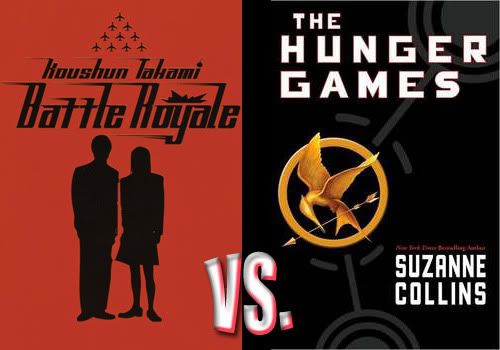
In an alternate timeline, the totalitarian government has enacted policies for an annual tournament for children to fight each other to the death. This is done as a means to establish control by the government, and... waiiit. Which franchise were we talking about again?
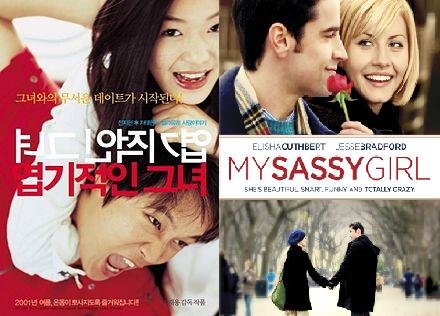
Totally different, see? Only one of them didn't suck.
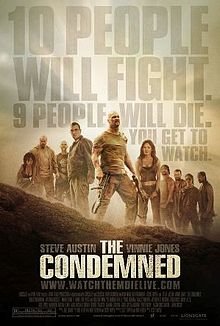
Although of course, this ripoff was much scarier because
"Stone Cold" Steve Austin was trying to act. Oh, synapse!
In an alternate timeline, the totalitarian government has enacted policies for an annual tournament for children to fight each other to the death. This is done as a means to establish control by the government, and... waiiit. Which franchise were we talking about again?
THERE WILL BE SPOILERS AHEAD!
This discussion will focus mainly on the film versions of Battle Royale and the Hunger Games. If any other medium or version would be used for comparison, it will be specified as such. Otherwise, assume I am referring to the movies.
It was inevitable for this discussion to crop up. Since the year 2000, when the controversial novel by Koushun Takami was turned into a film by the late Kinji Fukusaku, the controversy surrounding the film's violent and mature themes as portrayed by 15-year old kids shocked anyone who has heard of it, read of it, or seen it. Whether it was Japan or America, whether it was the novel, the film, or the manga, controversy hounded it. The premise of children fighting each other to the death, sanctioned by the government (As opposed to due to sheer savagery due to anarchy, as categorized by "Lord Of The Flies."), was an upsetting notion that gave people pause.
I've always been a fan of the film and the manga. I'm still in the process of reading through the novel, but I honestly feel that the loss in translation is keeping me from appreciating it as much as I did the film and the manga. I loathed the sequel of both the film and the manga and in my headcanon, neither of these things ever happened. In fact, I've watched something Battle Royale-related as recently as a few weeks ago.
As for the Hunger Games, I watched the film last Friday, and even gave it a very glowing review. On its own merits, the film stood strong and had more than its share of great moments, exciting action, and great character arcs. The lavish budget the film obviously had only aided in making the experience all the better.
And true, netizens far and wide were castigating The Hunger Games the minute the first book came out as being a ripoff of "Battle Royale." What? Because every single film with the same premise is now a ripoff, even if the execution is pretty much worlds apart?
This discussion will focus mainly on the film versions of Battle Royale and the Hunger Games. If any other medium or version would be used for comparison, it will be specified as such. Otherwise, assume I am referring to the movies.
It was inevitable for this discussion to crop up. Since the year 2000, when the controversial novel by Koushun Takami was turned into a film by the late Kinji Fukusaku, the controversy surrounding the film's violent and mature themes as portrayed by 15-year old kids shocked anyone who has heard of it, read of it, or seen it. Whether it was Japan or America, whether it was the novel, the film, or the manga, controversy hounded it. The premise of children fighting each other to the death, sanctioned by the government (As opposed to due to sheer savagery due to anarchy, as categorized by "Lord Of The Flies."), was an upsetting notion that gave people pause.
I've always been a fan of the film and the manga. I'm still in the process of reading through the novel, but I honestly feel that the loss in translation is keeping me from appreciating it as much as I did the film and the manga. I loathed the sequel of both the film and the manga and in my headcanon, neither of these things ever happened. In fact, I've watched something Battle Royale-related as recently as a few weeks ago.
As for the Hunger Games, I watched the film last Friday, and even gave it a very glowing review. On its own merits, the film stood strong and had more than its share of great moments, exciting action, and great character arcs. The lavish budget the film obviously had only aided in making the experience all the better.
And true, netizens far and wide were castigating The Hunger Games the minute the first book came out as being a ripoff of "Battle Royale." What? Because every single film with the same premise is now a ripoff, even if the execution is pretty much worlds apart?
Totally different, see? Only one of them didn't suck.
I was mostly insulated from this because I haven't read Young Adult material since Encyclopedia Brown (Harry Potter doesn't count.). I have heard of The Hunger Games, but I was by no means a fan, since I never even read it. Despite that, as a huge fan of the BR franchise, I definitely felt protective of anyone who would dare rip off and bastardize the premise. Few things are as masterfully terrifying as putting kids in life or death situations where they need to kill other kids to survive.
Although of course, this ripoff was much scarier because
"Stone Cold" Steve Austin was trying to act. Oh, synapse!
I walked into the movie with certain expectations, and a keen eye on the story themes, eager to jump in on the "how dare you rip off Battle Royale?!?" bandwagon when the unthinkable happened...
... don't take this the wrong way, but could it be that somebody on the internet was actually wrong, and The Hunger Games isn't a ripoff of Battle Royale? Like, at all?
... don't take this the wrong way, but could it be that somebody on the internet was actually wrong, and The Hunger Games isn't a ripoff of Battle Royale? Like, at all?
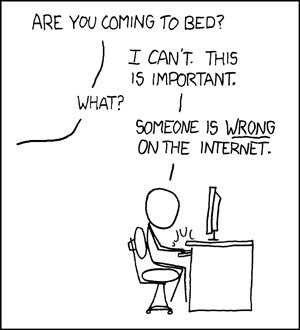
If you can't look past the themes of totalitarian government, kids as the victims, and wholesale murder as themes, then of course you'd think one was a ripoff of the other. It's when you actually look at the directions either franchise decided to take with these notions where you see the meat of contention and just how absolutely far apart the two films are.
In the tradition of Cracked, here are three reasons why Battle Royale wasn't really ripped off by Hunger Games. And, for the sake of argument, even if it were, I feel that the two works are vastly different enough to each stand on their own merits.
1. Battle Royale is a Program. The Hunger Games is a Game.
First of all, Battle Royale's premise didn't take it in the direction of the BR program being a game, but an actual control mechanism. While there is media coverage and whatnot, and while the manga translation turned it into a reality show concept, the film version did not turn it into a matter of entertainment. It wasn't a top ratings bonanza, or else the kids in the Program would have been very much aware about it.
In contrast, the Hunger Games made it very clear that this annual competition was a highly-anticipated spectacle by the people in Capitol, while even the 12 sectors participate as spectators as well to the Games, reluctantly or otherwise. As I pointed out, being satirical in nature, the Hunger Games were a matter of course and a matter of fact, and for the most part, looked wrong only to us and to the ones who didn't want to be in the Games.
2. Battle Royale is a Morality Play. Hunger Games is Deadpan Satire.
Which leads us to the second point: I would show Battle Royale to an ethics class as part of their course work, but not the Hunger Games. Battle Royale is clearly framed as a morality play, what with the tagline "Would you kill your best friend?" The theme of right and wrong is very big throughout the film, while it is downplayed at best in The Hunger Games. I'm aware that at some point, how wrong the Games are would become more emphasized in the succeeding books, but if we started including the sequels in this discussion, then yeah, Battle Royale wouldn't have a leg to stand on at all, I'm guessing.
The reason Battle Royale appealed so much to 2003-2004 me was because it was a genuine moral quandary that they posed, and one that really made me think. When you saw each character death excluding arguably Kiriyama's, you felt compelled to know about their story and what brought them to that point. Even the clear villains, such as Takeshi Sensei, were sympathetic, and the psycho femme fatale, Mitsuko, was even more so. While I was taking up ethics then, it made me think about themes that really felt appropriate.
The Hunger Games regarded the killings with a certain resignation and banality. The lead character was clearly willing to play the game, and the entrenchment of the Hunger Games as part and parcel of the Treaty of Treason has made it virtually unquestionable and more of a backdrop to a riveting adventure where we root for Katniss and maybe even Peeta and Rue to survive against all odds as the ultimate victor. Battle Royale makes no such attempt and instead makes us wish all 42 students didn't have to die.
3. Battle Royale is a tale of one class. The Hunger Games is a tale of one Tribute.
And that's the third biggest distinction between Battle Royale and The Hunger Games: BR is the tale of 42 kids sent to a deserted island to kill each other off. HG is a tale of Katniss Everdeen outplaying 23 other competitors to win. The fact that there is a focal character where everything happens through her point of view changes how we view the story as a whole. Even in the film, except for the bits involving the Gamemasters, the film was told nigh-exclusively within the sphere of Katniss's presence.
This changes the whole dynamic of the way the films play out, and who we root for throughout the movie. In Battle Royale, the movie wants us to root for the class as a whole .
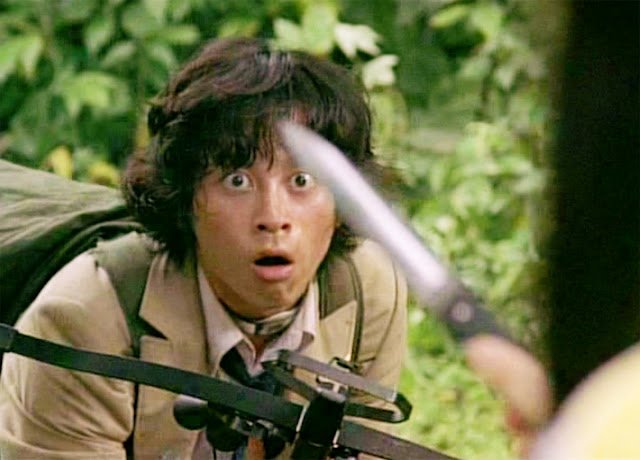
In the tradition of Cracked, here are three reasons why Battle Royale wasn't really ripped off by Hunger Games. And, for the sake of argument, even if it were, I feel that the two works are vastly different enough to each stand on their own merits.
1. Battle Royale is a Program. The Hunger Games is a Game.
First of all, Battle Royale's premise didn't take it in the direction of the BR program being a game, but an actual control mechanism. While there is media coverage and whatnot, and while the manga translation turned it into a reality show concept, the film version did not turn it into a matter of entertainment. It wasn't a top ratings bonanza, or else the kids in the Program would have been very much aware about it.
In contrast, the Hunger Games made it very clear that this annual competition was a highly-anticipated spectacle by the people in Capitol, while even the 12 sectors participate as spectators as well to the Games, reluctantly or otherwise. As I pointed out, being satirical in nature, the Hunger Games were a matter of course and a matter of fact, and for the most part, looked wrong only to us and to the ones who didn't want to be in the Games.
2. Battle Royale is a Morality Play. Hunger Games is Deadpan Satire.
Which leads us to the second point: I would show Battle Royale to an ethics class as part of their course work, but not the Hunger Games. Battle Royale is clearly framed as a morality play, what with the tagline "Would you kill your best friend?" The theme of right and wrong is very big throughout the film, while it is downplayed at best in The Hunger Games. I'm aware that at some point, how wrong the Games are would become more emphasized in the succeeding books, but if we started including the sequels in this discussion, then yeah, Battle Royale wouldn't have a leg to stand on at all, I'm guessing.
The reason Battle Royale appealed so much to 2003-2004 me was because it was a genuine moral quandary that they posed, and one that really made me think. When you saw each character death excluding arguably Kiriyama's, you felt compelled to know about their story and what brought them to that point. Even the clear villains, such as Takeshi Sensei, were sympathetic, and the psycho femme fatale, Mitsuko, was even more so. While I was taking up ethics then, it made me think about themes that really felt appropriate.
The Hunger Games regarded the killings with a certain resignation and banality. The lead character was clearly willing to play the game, and the entrenchment of the Hunger Games as part and parcel of the Treaty of Treason has made it virtually unquestionable and more of a backdrop to a riveting adventure where we root for Katniss and maybe even Peeta and Rue to survive against all odds as the ultimate victor. Battle Royale makes no such attempt and instead makes us wish all 42 students didn't have to die.
3. Battle Royale is a tale of one class. The Hunger Games is a tale of one Tribute.
And that's the third biggest distinction between Battle Royale and The Hunger Games: BR is the tale of 42 kids sent to a deserted island to kill each other off. HG is a tale of Katniss Everdeen outplaying 23 other competitors to win. The fact that there is a focal character where everything happens through her point of view changes how we view the story as a whole. Even in the film, except for the bits involving the Gamemasters, the film was told nigh-exclusively within the sphere of Katniss's presence.
This changes the whole dynamic of the way the films play out, and who we root for throughout the movie. In Battle Royale, the movie wants us to root for the class as a whole .
Except for this guy. He tried to rape Gogo Yubari, so screw this dude.
This was why Mimura was one of the favorite characters in the franchise to begin with, as he wasn't playing the game: he was trying to break the game. He had the right plan, and quite frankly, if it weren't for Kiriyama, he would've succeeded at it, too. There's just something really admirable about that.
Or how about Sugimura? How his quest to find Kotohiki could've been a movie in itself, and how his character arc was just nothing short of beautiful until the predictably grim and hopeless ending? Maybe even the girls at the lighthouse? These characters were sympathetic independently of Shuya and Noriko. You knew the kids in Battle Royale as a class, and wanted them to survive the games collectively. By the end of it, you didn't want to see Shuya playing the game, and when he ended up shooting Takeshi-sensei, that was the only time he actively tried to kill anyone, and certainly not a classmate.
In contrast, in The Hunger Games, it's clear that they want you to root for characters only in relation to Katniss. Heymitch, Cinna, Peeta, Rue, even Thresh. The arcs are centered around Katniss, so you aren't led to feel sympathetic to anyone who is antagonistic of Katniss, and it's also great how they managed to avoid turning Katniss into a Mary Sue just because she got an 11 in the Gamemaker evaluations. At the end of it all, you only cared about Katniss, and you wanted her to win the game, all the other kids (Excluding maybe Thresh, Peeta, and Rue.) be damned. You didn't get to know the other players the way you got to know Katniss and Peeta.
True, there is no question that I like Battle Royale more than Hunger Games. Despite that, there's no reason for me to hate on the Hunger Games on the basis of its originality or the lack of it. Not only does it not feel derivative of BR when you watch them side by side (Which I did.), but it isn't like the themes BR and HG share in common, totalitarian rule (1984, V for Vendetta, Brave New World), children in dire situations (Lord Of The Flies), or life or death struggles (Bloodsport, The Running Man) are particularly original and never-before touched upon, to begin with.
Yeah, they took the same initial premise, but they ran in parallel and starkly different directions, the least of them being the fact that while Battle Royale was clearly an adult-oriented film, Hunger Games was aimed at a young adult market. After everything has been said and done, I believe there is room in the world for both franchises.
And thank goodness for that.
Or how about Sugimura? How his quest to find Kotohiki could've been a movie in itself, and how his character arc was just nothing short of beautiful until the predictably grim and hopeless ending? Maybe even the girls at the lighthouse? These characters were sympathetic independently of Shuya and Noriko. You knew the kids in Battle Royale as a class, and wanted them to survive the games collectively. By the end of it, you didn't want to see Shuya playing the game, and when he ended up shooting Takeshi-sensei, that was the only time he actively tried to kill anyone, and certainly not a classmate.
In contrast, in The Hunger Games, it's clear that they want you to root for characters only in relation to Katniss. Heymitch, Cinna, Peeta, Rue, even Thresh. The arcs are centered around Katniss, so you aren't led to feel sympathetic to anyone who is antagonistic of Katniss, and it's also great how they managed to avoid turning Katniss into a Mary Sue just because she got an 11 in the Gamemaker evaluations. At the end of it all, you only cared about Katniss, and you wanted her to win the game, all the other kids (Excluding maybe Thresh, Peeta, and Rue.) be damned. You didn't get to know the other players the way you got to know Katniss and Peeta.
True, there is no question that I like Battle Royale more than Hunger Games. Despite that, there's no reason for me to hate on the Hunger Games on the basis of its originality or the lack of it. Not only does it not feel derivative of BR when you watch them side by side (Which I did.), but it isn't like the themes BR and HG share in common, totalitarian rule (1984, V for Vendetta, Brave New World), children in dire situations (Lord Of The Flies), or life or death struggles (Bloodsport, The Running Man) are particularly original and never-before touched upon, to begin with.
Yeah, they took the same initial premise, but they ran in parallel and starkly different directions, the least of them being the fact that while Battle Royale was clearly an adult-oriented film, Hunger Games was aimed at a young adult market. After everything has been said and done, I believe there is room in the world for both franchises.
And thank goodness for that.
Tuesday, April 26, 2011
Book Review: Undisputed, By Chris Jericho
.:Book Review: Undisputed, By Chris Jericho:.
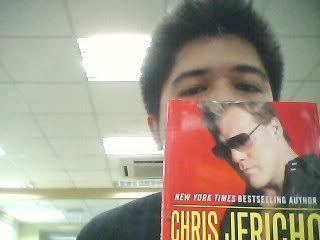
The one and only copy I found so far! This is so froot!
The one and only copy I found so far! This is so froot!
Y’know, with all the books I’ve read lately, I feel a bit guilty that I’ve only ever bothered to review Chris Jericho’s books so far. Considering I’ve read the books by Bret Hart, Ric Flair, and Mick Foley (Yes, all of his wrestling-related books.), as well as two books about Jordan, and one about Bird and Magic, it’s a bit interesting that it’s only Chris Jericho’s stuff I’ve actually featured on my blog, aside from your standard best-sellers like Dan Brown and JK Rowling.
And no, I don’t feel an ounce of guilt that I’ve gone from reading Hardt and Negri to reading Hart and Foley. Not everything I spend time on has to be some kind of navel-gazing exercise into existential angsting or deconstruction or some haphazardly post-modernized Communist Manifesto.
Maybe I’ll correct that someday, but for now, I’m pretty happy just being able to actually do a book review for a change of pace, and this book is a doozy. Ever since Mick Foley’s “Have A Nice Day,” books by wrestlers have been a dime-a-dozen, most of them being ghostwritten after the wrestler spills his guts to a recorder, leaving himself at the mercy of his writer if his story would be treated in any way different from how he envisioned it to be.
It’s safe to say that Chris Jericho didn’t follow that trend, although there’s nothing bad about having Ric Flair’s story told through the lens of his ghost writer. Like Foley and Hart, Jericho’s books have a unique stamp of authenticity on them, and they have all been best-selling authors on top of all that. When Jericho wrote “A Lion’s Tale,” he himself predicted it would be the first of three books from the Ayatollah of Rock and Rolla, so there was a lot of anticipation for his sophomore writing effort.
It took me a while to get my hands of “Undisputed.” I was going to and from Fully Booked branches for about a month before a solitary copy finally dropped off, and I snapped it up right away. While a paperback version would’ve been cheaper, I wasn’t inclined to wait six or so months for a copy of a book that has had tongues wagging and people like Larry Zybysko and “Superstar” Billy Graham frothing at the mouth over the supposed disrespect Chris Jericho has given to them.
I also wanted to see Jericho’s actual thoughts on the unfortunate events behind the Chris Benoit incident, and his very candid opinions made me feel for him all the more. It was done in perfectly good taste, and it neither sensationalized nor glossed over Chris Benoit’s life and times. It was a friend who is, like everyone else, asking himself what went wrong.
This book covers the moment Chris Jericho first entered the WWE to the very beginning of his second stint with the company. His road stories and his manner of telling these stories are funny, upbeat, and irresistibly charming. The way he details backstage politics as it happened right in his face, you would feel every ounce of injustice that seemed to be hurled his way, or every shot in the arm he got as if you were being patted on the back yourself.
I don’t know which parts in this book I’d say were my favourites, but I had a very soft spot for any time he told a story that I know about because I watched the particular show in question, as well as his brushes with (other) celebrities, especially the one where Axl Rose, during better days, actually shot the breeze on a local radio station much less like a rock and roll icon and more like a true-blue rock and roll fan. I never liked metal music, but I admired Fozzy’s dedication to their character for their first two albums, no matter how difficult it was for them to be taken seriously because of it.
As a huge wrestling fan, I marked out every single time Jericho wrote about his interactions with the Rock, Austin, Foley, and Undertaker, but more so when I read about the one time he managed to take Goldberg down. I was especially impressed by his candor when he outright said his win against Goldberg was a fluke and a rematch would probably result in him getting ripped to pieces by the man. At no point did it seem like he was posturing, even during the times where he would talk himself up. It felt like the story of a man who believed in himself enough and knew himself well enough to know when to hype himself up and when to eke in a word of self-aware honesty. That’s very rare, and that’s very commendable. In fact, if you read the book yourself, the best word to describe Mr. Jericho would be "froot." He is froot personified.
I don’t think giving a review of Jericho’s book could do it the kind of justice of simply reading it. If you’re a fan of wrestling, or if you’re just a fan of an honest writer talking about his very interesting and semi-charmed kind of life, then “Undisputed” is an amazing read from cover to cover. I’d daresay it was even better than “A Lion’s Tale,” which is no mean feat, as I loved that book, too. Then again, I guess it’s because I’m honestly more interested in Jericho’s WWE career than most anything else he was doing prior to it, so even if overall, A Lion’s Tale would probably win a lot more fans over, I related to Undisputed much more by default.
It doesn’t really matter, anyways, because even if you think that Undisputed is merely half as good as A Lion’s Tale, that’d still be pretty high praise for Jericho’s writing, in my humble opinion.
Here’s to hoping that the third book would have a day-to-day look at how Chris Jericho eventually wins the Dancing With The Stars show he’s currently competing in. I’d almost bet on him making final three, at worst.
Buy this book if you even remotely like wrestling. I can assure you, it would be much better than "Adventures in Larryland."
Evaluation: A+
And no, I don’t feel an ounce of guilt that I’ve gone from reading Hardt and Negri to reading Hart and Foley. Not everything I spend time on has to be some kind of navel-gazing exercise into existential angsting or deconstruction or some haphazardly post-modernized Communist Manifesto.
Maybe I’ll correct that someday, but for now, I’m pretty happy just being able to actually do a book review for a change of pace, and this book is a doozy. Ever since Mick Foley’s “Have A Nice Day,” books by wrestlers have been a dime-a-dozen, most of them being ghostwritten after the wrestler spills his guts to a recorder, leaving himself at the mercy of his writer if his story would be treated in any way different from how he envisioned it to be.
It’s safe to say that Chris Jericho didn’t follow that trend, although there’s nothing bad about having Ric Flair’s story told through the lens of his ghost writer. Like Foley and Hart, Jericho’s books have a unique stamp of authenticity on them, and they have all been best-selling authors on top of all that. When Jericho wrote “A Lion’s Tale,” he himself predicted it would be the first of three books from the Ayatollah of Rock and Rolla, so there was a lot of anticipation for his sophomore writing effort.
It took me a while to get my hands of “Undisputed.” I was going to and from Fully Booked branches for about a month before a solitary copy finally dropped off, and I snapped it up right away. While a paperback version would’ve been cheaper, I wasn’t inclined to wait six or so months for a copy of a book that has had tongues wagging and people like Larry Zybysko and “Superstar” Billy Graham frothing at the mouth over the supposed disrespect Chris Jericho has given to them.
I also wanted to see Jericho’s actual thoughts on the unfortunate events behind the Chris Benoit incident, and his very candid opinions made me feel for him all the more. It was done in perfectly good taste, and it neither sensationalized nor glossed over Chris Benoit’s life and times. It was a friend who is, like everyone else, asking himself what went wrong.
This book covers the moment Chris Jericho first entered the WWE to the very beginning of his second stint with the company. His road stories and his manner of telling these stories are funny, upbeat, and irresistibly charming. The way he details backstage politics as it happened right in his face, you would feel every ounce of injustice that seemed to be hurled his way, or every shot in the arm he got as if you were being patted on the back yourself.
I don’t know which parts in this book I’d say were my favourites, but I had a very soft spot for any time he told a story that I know about because I watched the particular show in question, as well as his brushes with (other) celebrities, especially the one where Axl Rose, during better days, actually shot the breeze on a local radio station much less like a rock and roll icon and more like a true-blue rock and roll fan. I never liked metal music, but I admired Fozzy’s dedication to their character for their first two albums, no matter how difficult it was for them to be taken seriously because of it.
As a huge wrestling fan, I marked out every single time Jericho wrote about his interactions with the Rock, Austin, Foley, and Undertaker, but more so when I read about the one time he managed to take Goldberg down. I was especially impressed by his candor when he outright said his win against Goldberg was a fluke and a rematch would probably result in him getting ripped to pieces by the man. At no point did it seem like he was posturing, even during the times where he would talk himself up. It felt like the story of a man who believed in himself enough and knew himself well enough to know when to hype himself up and when to eke in a word of self-aware honesty. That’s very rare, and that’s very commendable. In fact, if you read the book yourself, the best word to describe Mr. Jericho would be "froot." He is froot personified.
I don’t think giving a review of Jericho’s book could do it the kind of justice of simply reading it. If you’re a fan of wrestling, or if you’re just a fan of an honest writer talking about his very interesting and semi-charmed kind of life, then “Undisputed” is an amazing read from cover to cover. I’d daresay it was even better than “A Lion’s Tale,” which is no mean feat, as I loved that book, too. Then again, I guess it’s because I’m honestly more interested in Jericho’s WWE career than most anything else he was doing prior to it, so even if overall, A Lion’s Tale would probably win a lot more fans over, I related to Undisputed much more by default.
It doesn’t really matter, anyways, because even if you think that Undisputed is merely half as good as A Lion’s Tale, that’d still be pretty high praise for Jericho’s writing, in my humble opinion.
Here’s to hoping that the third book would have a day-to-day look at how Chris Jericho eventually wins the Dancing With The Stars show he’s currently competing in. I’d almost bet on him making final three, at worst.
Buy this book if you even remotely like wrestling. I can assure you, it would be much better than "Adventures in Larryland."
Evaluation: A+
Monday, September 20, 2010
Project 365 (263/365): The Last Greatest Magician In The World
.:263/365: The Last Greatest Magician In The World:.
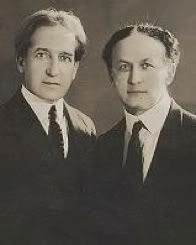
Jim Steinmeyer’s books have always been highly anticipated and stuff of legend. This book, coming out early next year, will focus on Howard Thurston, and although this is mainly a biographical book, it appears Harry Houdini will also have a significant part in this book, perhaps highlighting the not-hostile but all-prevalent rivalry between two of the best magicians of all time.
Now, if anyone has read Steinmeyer’s “Hiding The Elephant,” they would know that Jim writes excellently, and is every bit as passionate about magic as he is a great writer. With that in mind, I eagerly anticipate the release of this book, because as detailed as all the biographies and documentaries about Houdini happen to be, Howard Thurston doesn’t get nearly enough press, and it’s about time people recognized him more.
Thursday, September 16, 2010
Project 365 (259/365): The Mind and Magic Of David Berglas
.:259/365: The Mind And Magic Of David Berglas:.
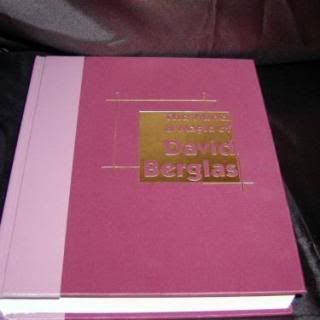
If you are getting this book solely to learn the famous Berglas effect, you will be sorely disappointed. However, what you will discover when you read this amazing book is the amazing amount of material, gathered from five decades of David Berglas’s acclaimed and celebrated career.
From his blindfold act, to many different card routines he utilizes, even to basic ideas about the Berglas effect, you won’t have a shortage of stuff to go through in this book. Give it a try, because I haven’t regretted reading this one at all. You get headline predictions, magic squares, and a host of others that you never expected in a million years to just be given away in this book.
No question about it: David Berglas takes the mind on a wild journey no two legs can take you.
Wednesday, September 15, 2010
Project 365 (258/365): The Colored Books Of Mentalism
.:258/365: The Colored Books Of Mentalism:.
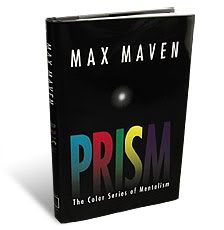
Written by the ever-famous Max Maven, or as he is otherwise known, Phil Goldstein, the Colored Books Of Mentalism (I forgot which colors he used, but he used five.) is one of the most influential mentalism works for the past three decades.
Totalling 53 different, powerful mentalism effects, Max Maven’s ideas were highly sought after in his heyday as these booklets were sold separately. Many people view the physical copies of these books as true collector’s items: artifacts of a classic age in mentalism when people truly believed that mentalism was the work of the devil.
Journey into the workings of a malevolent genius, and understand precisely why Max Maven is every bit as good as people claim he is.
Tuesday, September 14, 2010
Project 365 (257/365): Tarbell's Course In Magic
.:257/365: Tarbell’s Course In Magic:.
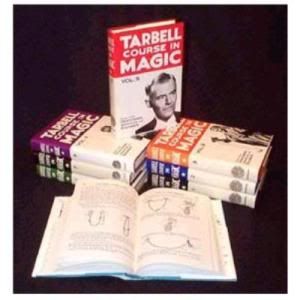
A compilation of eight books, Tarbell’s course is a seminal compilation of magic effects ranging the gamut of stage illusions to mentalism to coins. There really is so much ground that is covered by these eight volumes that it’s hard to imagine a book that is a denser read than Harlan Tarbell’s masterpiece.
Even though the material is somewhat dated in that it was completed way back in 1928, there is no question that his material is still useful even in this day and age, because he gets into lessons involving not just numerous effects used back then and even today, but even lessons about blocking, humor, and other performance aids that most teachers often neglect to go into.
Many magicians cite the Tarbell course as one of their biggest influences getting into magic. It’s not so difficult to see why at all.
Monday, September 13, 2010
Project 365 (256/365): House Of Mystery
.:256/365: House Of Mystery:
Well, this looks like a must-have for any magic enthusiast out there.
Edited by Raymond Teller and Todd Karr, this two-volume effort is a collection of mysteries from “Abbott’s Book of Mysteries” that has fooled the likes of Kellar, Okito, Ching Ling Foo, and so forth, as Abbott used methods utilized by spirit mediums. Yup. Methods used by charlatans who must evade being caught in the act for a living. This compilation is annotated, and even contains fifty essays from Teller about technique, psychology, and presentation. Teller even goes out of his way to reveal one of his best magic secrets.
You can’t go wrong with material this dense. Even if it’s not necessarily a book that will teach you the secrets of magic, it’s more importantly a very important look into the world of spirit mediums, and how their careers, no matter how blatantly unethical, run parallel to the magic industry. With insights into how they work and how you could take these performance ideas into your own act, it’s hard to imagine anyone who has these two books ever having a shortage of new ideas and approaches they can use for their performances.
Wednesday, September 08, 2010
Project 365 (251/365): Criss Angel's Secret Revelations
.:251/365: Criss Angel’s Secret Revelations:.
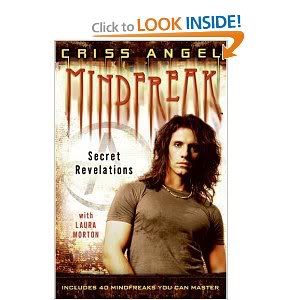
Props where props are due: this book isn’t half bad at all. In fact, it’s a pretty great read, because the narrative style feels just the same way as Criss Angel, who, love him or hate him, knows how to talk circles around most anybody else.
The fact that he even gives forty effects in the second half of the book just makes things even better. That only means that the second half of the book is actually not self-glorifying dreck. Oh, okay. I guess I can’t really resist taking a snipe at my “favourite” magician...
Monday, September 06, 2010
Project 365 (248/365): Derren Brown's Mysterious Stranger
.:248/365: David Blaine’s Mysterious Stranger:.
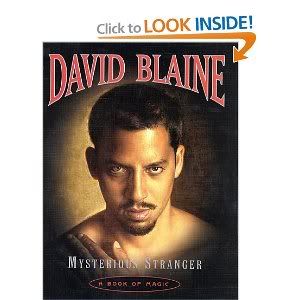
Perhaps one of the most hyped books written by a magician in the last decade, “Mysterious Stranger” is quite a sendup to magic history, and overall, an engaging read. The little armchair treasure hunt included in the book was also an excellent little touch that lent to a heightened interest in David Blaine’s book as well.
Ultimately, “Mysterious Stranger” served as a very early autobiography of David Blaine, discussing his life story, all the while discussing magic history through his own viewpoint. It’s worth buying, but you have to forego the chance to win $100,000, since someone already figured out the Treasure Hunt involved in the book.
I am eagerly awaiting the day Criss Angel tries his hand at writing his own book... if he’s even capable of writing a book, let alone writing at all.
Saturday, September 04, 2010
Project 365 (247/365): The Prestige (Book)
.:247/365: The Prestige (Book):.
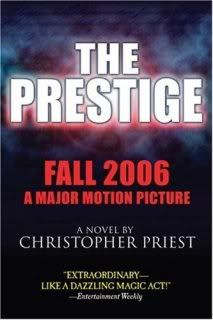
The movie was better, but by no means does this mean that the book was a bad read.
In fact, the book, in many ways, weaves a different tale from the movies, and as such, has strengths both in its narrative and in its very structure as a published book rather than as a recorded film.
You’ve heard the story before: two magicians, Angier and Borden, and their rivalry as magicians slowly built up and escalated unto epic levels. While in the film, the two used to be friends who became bitter rivals when a botched escape act resulted in the death of Angier’s wife, the book’s rivalry started off with something far less drastic: Borden exposed Angier during one of his séances, and thus became an annoying thorn in Angier’s side.
This petty rivalry only highlighted how the smallest of transgressions, when unaddressed, can snowball into larger, unimaginable treachery. As the acts of aggression between the feuding magicians escalates progressively, they turn to more and more sinister means of upstaging each other, and the feud ends unresolved, and it becomes a mystery for their respective next of kin to unravel, as they take us on a ride into the mystery that lies beneath the murky details on the lives of both men.
The pacing of the book is decidedly slower than the film, but this results in a very good, stewing effect on the readers: what seems to be a deep-seated mystery becomes more and more horrifying as the book progresses. It likens itself to how a magic trick is often done, really: building up towards something, the whizz and the bang, then the aftermath. However, in book format, the buildup is actually dragged out to great effect, akin to the mentalist act, as opposed to the magician’s wham-bam-thank-you-ma’am approach most of the time.
As such, I do recommend this book to anyone who enjoys thrillers. I suggest reading the book, then watching the movie, if you haven’t yet, as it would be one of the most appropriate times for you to say that indeed, the movie was better than the book, but the book itself was still one piece of work worthy of more than one reading.
Monday, July 26, 2010
Project 365 Two-Fer (220-221)
.:220/365: Hiding The Elephant:.
“Hiding The Elephant” is another book you should be reading if you’re interested in the history of magic, as it is Jim Steinmeyer’s very handy historical guide to magical illusions, from their origins to other aspects about them, and surprisingly, has never once raised the furor of other magicians, despite actually exposing certain secrets of the art form. The fact that Mr. Steinmeyer is actually not only an esteemed writer but more so one of the chief designers of magical illusions of his time tends to give the man a pass.
Interestingly enough, the title is based on the illusion that is performed by one Harry Houdini, who, despite his natural appeal in the realm of escapology, still felt compelled to perform classic magical acts, managed to actually do this amazing bit of magic in a circus tent. It was pretty much a disappearing elephant illusion, and it boggles the mind how something this amazing does not get a second look when people consider the illustrious career and times of Mr. Houdini.
Anyways, since I have a very big meeting coming up on Tuesday, let this two-for-one post suffice for the time being, as I wholeheartedly recommend both books, as I’ve actually read both of them already.
Speaking of these books, I borrowed them from my good friend, Elbert Or, who just so happens to have had his school blessing recently, as he opened an art school in Katipunan. Pretty awesome, and it was good to catch up with him and spend time after the blessing, just hearing how he’s doing and what’s up.
.:221/365: Carter Beats The Devil:.
“Carter Beats Devil” is the name of a very entertaining book written by Glen David Gold, that is a fictionalized depiction of a very key moment in magician Charles Joseph Carter’s magical career, where he performed an apparently death-defying bit of magic with US President Harding, where the president seemed to have been dismembered, killed, and even fed to a lion, then restored to full health afterwards.
Unfortunately, shortly after this, the president mysteriously died, and this results in a very awkward situation for Carter, who is now faced with the implication that he himself may have caused such a tragedy to happen.
Overall, this is a great book, and you really should check it out. I don’t want to spoil much of the book, and admittedly, Project 365 has been very difficult for me to maintain lately, but I really want to see it through and finish this whole thing, as I go and anticipate Filipino Magic Month in August, where I would talk about the luminaries in our humble industry.
“Hiding The Elephant” is another book you should be reading if you’re interested in the history of magic, as it is Jim Steinmeyer’s very handy historical guide to magical illusions, from their origins to other aspects about them, and surprisingly, has never once raised the furor of other magicians, despite actually exposing certain secrets of the art form. The fact that Mr. Steinmeyer is actually not only an esteemed writer but more so one of the chief designers of magical illusions of his time tends to give the man a pass.
Interestingly enough, the title is based on the illusion that is performed by one Harry Houdini, who, despite his natural appeal in the realm of escapology, still felt compelled to perform classic magical acts, managed to actually do this amazing bit of magic in a circus tent. It was pretty much a disappearing elephant illusion, and it boggles the mind how something this amazing does not get a second look when people consider the illustrious career and times of Mr. Houdini.
Anyways, since I have a very big meeting coming up on Tuesday, let this two-for-one post suffice for the time being, as I wholeheartedly recommend both books, as I’ve actually read both of them already.
Speaking of these books, I borrowed them from my good friend, Elbert Or, who just so happens to have had his school blessing recently, as he opened an art school in Katipunan. Pretty awesome, and it was good to catch up with him and spend time after the blessing, just hearing how he’s doing and what’s up.
.:221/365: Carter Beats The Devil:.
“Carter Beats Devil” is the name of a very entertaining book written by Glen David Gold, that is a fictionalized depiction of a very key moment in magician Charles Joseph Carter’s magical career, where he performed an apparently death-defying bit of magic with US President Harding, where the president seemed to have been dismembered, killed, and even fed to a lion, then restored to full health afterwards.
Unfortunately, shortly after this, the president mysteriously died, and this results in a very awkward situation for Carter, who is now faced with the implication that he himself may have caused such a tragedy to happen.
Overall, this is a great book, and you really should check it out. I don’t want to spoil much of the book, and admittedly, Project 365 has been very difficult for me to maintain lately, but I really want to see it through and finish this whole thing, as I go and anticipate Filipino Magic Month in August, where I would talk about the luminaries in our humble industry.
Subscribe to:
Posts (Atom)